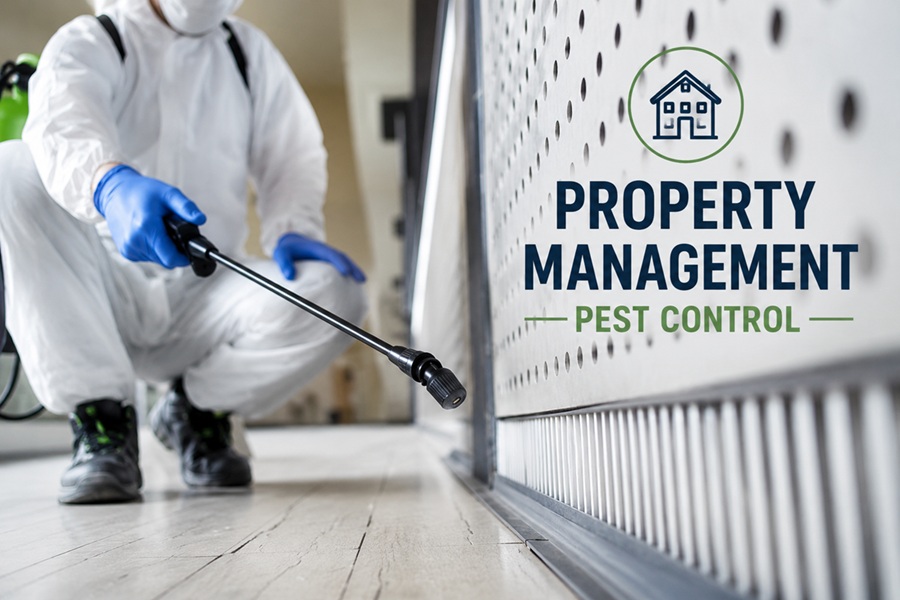
Property management pest control is the organized approach landlords and property managers use to prevent and handle pests across rental properties, combining regular prevention, prompt response to tenant reports, and clear responsibility between owner and tenant. In most situations the property owner or manager is responsible for keeping units habitable and pest-free, particularly for infestations tied to the building itself, while tenants are expected to keep their space clean and report problems quickly. Getting this system right protects your property, your tenants, and your reputation.
Pests in a rental are more than a nuisance, they can breach habitability requirements, damage the building, drive good tenants away, and spread between units in multi-family properties. A proactive pest program is far cheaper and less stressful than reacting to infestations one crisis at a time. This guide covers who is responsible, how to prevent problems, how to communicate with tenants, and how to build a pest control program that actually works. Note that specific legal responsibilities vary by location, so always check your local laws and lease terms.
| What it is | Managing pests across rental properties systematically |
| Usually responsible | The owner/manager for habitability and building pests |
| Tenant’s role | Cleanliness and prompt reporting |
| Best approach | Prevention through Integrated Pest Management |
| Multi-family risk | Pests spreading between units |
| Key document | Clear pest terms in the lease |
| Cheaper than | Reacting to full infestations later |
| Varies by | Local laws and lease agreements |
Who Is Responsible, Owner or Tenant?
Responsibility is the question that causes the most friction, and while specifics vary by jurisdiction, a general principle holds: landlords are typically responsible for providing a habitable, pest-free property, especially for infestations rooted in the building’s structure or shared areas. Tenants are generally expected to maintain reasonable cleanliness and report issues promptly, and may bear responsibility if their own behaviour clearly caused an infestation.
Because the line can blur, the smartest move is to spell it out in the lease. A clear clause defining who handles what, and requiring tenants to report pests quickly, prevents disputes later. Always align these terms with your local landlord-tenant laws, which can impose specific duties on owners regardless of what a lease says.
Why Prevention Beats Reaction
The single biggest lesson in rental pest control is that prevention is far cheaper and easier than dealing with a full infestation. A small ant or mouse issue caught early is a quick fix, while an ignored problem can spread through walls into neighbouring units, damage the property, and trigger habitability complaints. In multi-family buildings especially, pests do not respect unit boundaries, so one neglected apartment can become everyone’s problem.
A preventive program also protects tenant relationships. Renters remember how quickly and professionally a pest issue was handled, and a fast, competent response keeps good tenants renewing while a slow one sends them looking elsewhere and leaving poor reviews.
Building a Prevention Program
An effective program leans on Integrated Pest Management, which prioritizes removing the conditions that attract pests over simply spraying after they arrive. For rentals, that means regular inspections, sealing entry points, and addressing the moisture and food sources pests seek.
- Schedule routine professional inspections and preventive treatments
- Seal cracks, gaps, and entry points around the building
- Fix leaks and moisture problems that attract pests
- Maintain landscaping so vegetation does not touch the structure
- Keep shared areas, trash storage, and basements clean
- Address any single unit’s issue quickly before it spreads
Handling Tenant Reports
How you respond to a pest report shapes both the outcome and the tenant relationship. Speed and clarity matter most. Make it easy for tenants to report problems, respond promptly, and communicate what will happen and when. In multi-family buildings, treat a report in one unit as a signal to check neighbouring units, since a single sighting often means the problem is wider than it appears.
- Give tenants a simple, clear way to report pest issues.
- Acknowledge reports quickly and set expectations for the response.
- Schedule professional treatment promptly rather than delaying.
- Inspect adjacent units in multi-family buildings.
- Follow up to confirm the problem is resolved.
- Document the report, response, and outcome for your records.
Working With a Pest Control Provider
Most property managers partner with a professional pest control company on an ongoing basis rather than calling around during each crisis. A recurring service contract provides scheduled prevention, priority response when issues arise, and consistent documentation, which is valuable if a dispute or habitability question ever comes up. When choosing a provider, look for one experienced with rental and multi-family properties, since they understand the between-unit dynamics and the documentation landlords need.
Documentation and Legal Protection
Good records are quietly one of the most important parts of rental pest control. Keeping a log of inspections, tenant reports, treatments, and communications protects you if a tenant later claims an issue was ignored, and demonstrates that you met your habitability obligations. Combined with clear lease terms and compliance with local law, thorough documentation is your best defense against disputes and a sign of a professionally run operation.
Frequently Asked Questions
Is the landlord or tenant responsible for pest control?
It varies by location, but landlords are generally responsible for a habitable, pest-free property, especially for building-related infestations. Tenants are typically expected to keep clean and report issues, and may be responsible if their behaviour caused the problem. Local law and the lease govern the specifics.
How can landlords prevent pests in rentals?
Through prevention: routine inspections and treatments, sealing entry points, fixing leaks, maintaining landscaping, keeping shared areas clean, and addressing any unit’s issue quickly before it spreads to neighbours.
Why does pest response speed matter so much?
Because pests multiply and spread, especially in multi-family buildings where they move between units. Fast response contains the problem, limits cost, meets habitability duties, and keeps good tenants satisfied.
Should landlords have a pest control contract?
For most, yes. An ongoing contract provides scheduled prevention, priority response, and consistent documentation, which is cheaper than reacting to infestations and valuable if a habitability question ever arises.
Can a landlord charge a tenant for pest control?
Sometimes, if the tenant’s actions clearly caused the infestation and local law and the lease allow it. For building-related pests, the owner is generally responsible. Always follow your local landlord-tenant rules.
How often should rental properties be treated for pests?
Many landlords use a recurring program with scheduled preventive visits, commonly quarterly, plus prompt response to any reports. The right frequency depends on the property, location, and pest pressure.
What should be in a lease about pests?
A clear clause defining owner and tenant responsibilities, a requirement to report issues promptly, and expectations around cleanliness. Align the wording with local law, which can override lease terms.
What is Integrated Pest Management for rentals?
It is a prevention-first approach that removes the conditions attracting pests, through inspections, sealing entry points, and fixing moisture and food sources, rather than relying on repeated spraying. For rentals, it keeps problems from starting and reduces the need for reactive treatments.
Making Tenants Partners in Prevention
Even the best pest program struggles without tenant cooperation, because daily habits inside a unit heavily influence whether pests take hold. The smart approach is to treat tenants as partners rather than adversaries, giving them the knowledge and tools to keep their space uninviting to pests and to report early. A short move-in guide on preventing pests sets expectations from day one.
Clear, blame-free communication is what makes this work. Tenants who fear being charged or blamed tend to hide problems until they are severe, so encouraging prompt, penalty-free reporting of early sightings serves everyone. When a tenant does report an issue, responding quickly and professionally reinforces that reporting is worthwhile, which keeps small problems from festering into infestations that spread through the building.
- Provide a simple move-in guide on preventing pests
- Encourage early, penalty-free reporting of any sightings
- Explain basic habits like sealing food and managing trash
- Respond to reports quickly to reward cooperation
- Keep communication blame-free so problems surface early
- Remind tenants that early action protects their own comfort
Final Thoughts
Property management pest control works best as a system, not a series of emergencies. Clarify responsibility in the lease within your local laws, lean on prevention through regular inspections and Integrated Pest Management, and respond to tenant reports quickly and professionally. Partner with a provider experienced in rentals, document everything, and treat one unit’s issue as a building-wide signal. Handled this way, pest control protects your property’s value, keeps tenants happy, and spares you the far greater cost of a full-blown infestation.