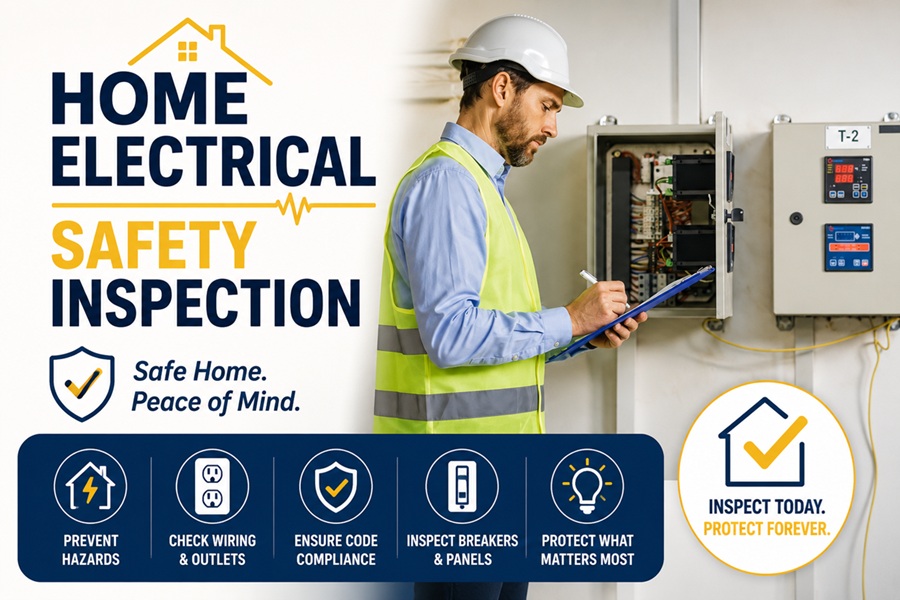
A home electrical safety inspection is a thorough check of your home’s electrical system by a licensed electrician, covering the main panel, wiring, outlets, switches, grounding, and safety devices to confirm everything is safe and up to code. During the inspection, the electrician examines the breaker panel for proper capacity and condition, tests outlets and switches, checks that GFCI and AFCI protection is present where required, inspects visible wiring, and verifies grounding and smoke and carbon monoxide detectors. The result is a report detailing any hazards, code issues, or repairs needed.
Knowing exactly what an inspection includes helps you understand its value and prepare for one. It is not a quick glance; a proper inspection systematically works through the components that keep your home safe from electrical fires and shock. This guide walks through what the electrician checks, how the process unfolds, how long it takes and costs, and what you receive at the end, so you know what to expect.
| What it is | A licensed electrician’s full check of the electrical system |
| Panel check | Capacity, condition, breakers, connections |
| Outlets and switches | Tested for function and safety |
| Protection devices | GFCI and AFCI where required |
| Grounding | Verified for safety |
| Detectors | Smoke and carbon monoxide alarms checked |
| Outcome | A written report of issues and repairs |
| Performed by | A licensed, qualified electrician |
What the Electrician Checks
A comprehensive inspection touches every major part of the electrical system, because a fault anywhere can create a hazard. The electrician moves methodically from the panel outward to the outlets and fixtures throughout the home.
- The main electrical panel: capacity, breaker condition, wiring connections, and signs of overheating
- Outlets and switches: proper wiring, function, and any damage or scorching
- GFCI protection in wet areas like kitchens, bathrooms, and outdoors
- AFCI protection where required to guard against arc faults
- Grounding and bonding throughout the system
- Visible wiring for damage, wear, or outdated types
- Smoke and carbon monoxide detectors for presence and operation
- Light fixtures, ceiling fans, and their connections
The Electrical Panel Gets Special Attention
The main panel is the heart of the system, so it receives close scrutiny. The electrician checks whether the panel has adequate capacity for the home’s demands, since an overloaded or undersized panel is a common issue in older homes. They look for loose or corroded connections, signs of overheating or scorching, proper breaker sizing, and any outdated or recalled panel types known to be problematic. Because so many electrical hazards trace back to the panel, a careful examination here is central to the whole inspection.
How the Process Works
An inspection follows a logical sequence, and knowing it helps you understand what the electrician is doing as they move through your home.
- The electrician reviews the home’s age, size, and any concerns you raise.
- They inspect the main panel and any subpanels in detail.
- They test outlets, switches, and GFCI and AFCI devices room by room.
- They check grounding, visible wiring, fixtures, and detectors.
- They document every issue, hazard, and code concern found.
- They review the findings with you and provide a written report.
How Long It Takes and What It Costs
The time and cost depend on the size and age of the home and the depth of the inspection. A typical inspection often takes a couple of hours, longer for large or older homes with more to examine. Costs vary by location and scope, and older homes sometimes reveal more issues that extend the visit. Because an inspection can prevent a fire or a dangerous shock, most homeowners find it well worth the modest cost, particularly for the peace of mind it provides.
Is a home electrical inspection worth it?
Yes for most homeowners. For a modest cost it checks the panel, wiring, outlets, grounding, and safety devices, catching hidden hazards that could cause a fire or shock, and it provides documentation and peace of mind about the system powering your home.
Can I do an electrical safety inspection myself?
No. A thorough inspection needs a licensed electrician’s training and testing tools to assess wiring, panels, and protective devices safely and to code. Homeowners can watch for warning signs, but the inspection itself should be professional.
What the Report Tells You
The deliverable is a report summarizing the inspection’s findings. It typically flags any immediate safety hazards, code violations, and components that are worn or outdated, along with recommended repairs or upgrades. A good report prioritizes issues so you know what needs urgent attention versus what can wait. This document is valuable not only for keeping your home safe but also when buying or selling, since it gives a clear picture of the electrical system’s condition.
Common Issues an Inspection Uncovers
- Overloaded or outdated electrical panels
- Missing GFCI protection in wet areas
- Improper or unsafe DIY wiring
- Damaged, worn, or outdated wiring
- Ungrounded outlets and reversed polarity
- Missing or non-working smoke and carbon monoxide detectors
Frequently Asked Questions
What does an electrical safety inspection include?
It includes a thorough check of the main panel, outlets, switches, wiring, grounding, GFCI and AFCI protection, and smoke and carbon monoxide detectors, ending with a written report of any hazards, code issues, or repairs needed.
How long does an electrical inspection take?
Often a couple of hours, though larger or older homes take longer because there is more to examine and older systems can reveal more issues. The electrician works methodically from the panel through every room.
Who performs an electrical safety inspection?
A licensed, qualified electrician, who has the training to assess the system safely and to identify code issues and hazards. It is not a job for a general handyman, given the safety and code expertise required.
What do I get at the end?
A written report detailing any safety hazards, code violations, and recommended repairs or upgrades, usually prioritized by urgency. This document guides your next steps and is useful when buying or selling a home.
How much does a home electrical inspection cost?
Costs vary by location, home size, and scope, with larger or older homes generally costing more because there is more to examine. Given that an inspection can prevent a fire or serious shock, most homeowners find the modest cost well worth the safety and peace of mind.
How often should I have my home’s electrics inspected?
Even without symptoms, periodic checks are wise, and older homes, those never inspected, or homes with a history of electrical issues benefit from more frequent attention. Think of it like other preventive maintenance that keeps small faults from becoming dangerous.
Can a handyman do an electrical inspection?
It is best left to a licensed electrician, who has the training to assess the system safely and to recognize code issues and hidden hazards. A general handyman typically lacks the qualifications for a proper, trustworthy electrical safety assessment.
Will an inspection find hidden wiring problems?
A thorough inspection checks accessible wiring, the panel, outlets, and protection devices, and can flag many hidden hazards through testing and signs of trouble. Some issues inside walls may need further investigation, which the electrician will recommend if warranted.
Preparing for Your Inspection
A little preparation helps an electrical inspection go smoothly and thoroughly. Before the electrician arrives, make sure they can access the key areas, especially the main panel, which is sometimes blocked by storage, along with outlets, the water heater area, and any subpanels. Clearing a path to these spots lets the inspector work efficiently and check everything properly.
It also helps to note any concerns or symptoms you have noticed, so you can point them out. If certain outlets do not work, a breaker trips often, lights flicker, or you have done or inherited any DIY electrical work, mentioning it directs the electrician’s attention and ensures those issues get examined closely. The more context you provide, the more useful the inspection.
Finally, choose the right professional. An electrical safety inspection should be performed by a licensed, qualified electrician rather than a general handyman, because it requires the training to assess the system safely and to recognize code issues and hidden hazards. Confirming the inspector’s licensing and experience ensures you get an accurate, trustworthy assessment of your home’s electrical health.
- Clear access to the panel, outlets, and subpanels
- Note any symptoms or problem areas to point out
- Mention any past DIY or inherited electrical work
- Hire a licensed, qualified electrician, not a handyman
- Ask for the findings in a written report
Final Thoughts
A home electrical safety inspection is a systematic, top-to-bottom check of your electrical system by a licensed electrician, covering the panel, wiring, outlets, protection devices, grounding, and detectors, and ending with a clear report. Knowing what it covers helps you see its value: it catches the hidden hazards that cause fires and shocks before they become emergencies. Whether your home is old, recently renovated, or simply due for a check, an inspection delivers both safety and peace of mind for a modest cost.