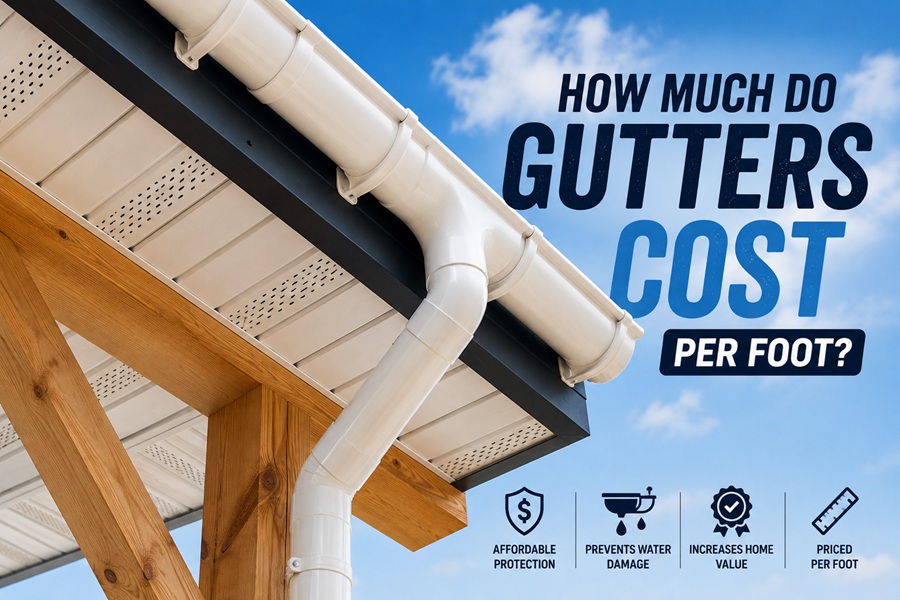
Gutters usually cost between $6 and $28 per linear foot installed for most homeowners. This price typically includes both materials and labor. A broader range is about $4 to $40 per linear foot, depending on the gutter material, home height, roofline complexity, local labor rates, and add-ons such as gutter guards or extra downspouts.
Gutters are priced by the linear foot, which means the cost is based on the length of gutter installed along your roofline. For example, if your home needs 180 linear feet of gutters and the installed price is $12 per foot, the estimated cost would be about $2,160 before any extras.
The biggest factor affecting gutter cost per foot is the material. Vinyl and aluminum are usually more affordable, while steel, zinc, and copper cost more. Installation details also matter, especially if your home is two stories, has difficult access, or has a complicated roof design.
This guide breaks down typical gutter costs per foot, what affects the price, and how to estimate your total project cost.
Average Gutter Cost Per Foot
Most standard gutter installations fall between $6 and $28 per linear foot. This includes the gutter material and professional installation.
Here is a general price guide:
- Low-cost gutters: $4 to $8 per linear foot
- Standard gutters: $8 to $18 per linear foot
- Higher-end gutters: $18 to $28 per linear foot
- Premium gutters: $28 to $40+ per linear foot
These numbers are general estimates. Prices vary by location, contractor, material availability, and the details of your home.
A simple one-story home with aluminum gutters will usually cost much less per foot than a two-story home with copper gutters and gutter guards.
Why Gutters Are Priced by the Linear Foot
Gutters are measured by length, not by the square footage of your home. Contractors calculate how many feet of gutter are needed along the edges of your roof where water needs to be collected and directed away.
Your home’s square footage can help create a rough estimate, but it does not tell the full story. Two homes with the same square footage may need very different amounts of gutter depending on their layout.
For example, a simple rectangular home may need fewer linear feet than a house with multiple roof sections, porches, dormers, corners, and attached garages.
A contractor will usually measure:
- Roof edges that need gutters
- Corners and inside/outside angles
- Downspout locations
- Roof slope and drainage needs
- Areas where water collects heavily
This is why an in-person or detailed local quote is more accurate than a general online estimate.
Gutter Cost by Material
Material is the main reason gutter prices vary so much. Some materials are inexpensive and practical, while others are chosen for strength, appearance, or long lifespan.
Vinyl Gutters
Vinyl gutters are usually one of the cheapest options. They are lightweight, easy to install, and resistant to rust. For homeowners on a tight budget, vinyl can be appealing.
However, vinyl is not always the most durable choice. It can crack in cold weather, warp in extreme heat, and become brittle over time. Vinyl gutters may work well in mild climates, but they are usually not the best option for harsh weather areas.
Best for: Budget projects and mild climates Cost level: Low
Aluminum Gutters
Aluminum is one of the most popular gutter materials for homes. It is affordable, rust-resistant, lightweight, and available in many colors. Aluminum gutters offer a good balance between cost and performance, which makes them a common choice for professional installations.
Many seamless gutter systems are made from aluminum. Seamless gutters are custom-cut on-site, which reduces joints and helps lower the risk of leaks.
Best for: Most residential homes Cost level: Low to mid-range
Steel Gutters
Steel gutters are stronger than aluminum and can handle more impact from ladders, branches, snow, or rough weather. Galvanized steel is more affordable than stainless steel, but it can rust if the coating wears down.
Steel is heavier than aluminum, so installation may cost more. It can be a good option in areas where durability is a priority.
Best for: Homes in areas with heavy snow or rough weather Cost level: Mid to high
Copper Gutters
Copper gutters are a premium option. They are durable, attractive, and often used on historic homes, luxury properties, or houses where curb appeal is a major priority.
Copper does not need painting and develops a natural patina over time. The downside is the price. Copper gutters can cost much more per foot than aluminum or vinyl.
Best for: High-end homes and historic properties Cost level: Premium
Zinc Gutters
Zinc is another premium gutter material. It is durable, long-lasting, and develops a protective patina, similar to copper. Zinc gutters are less common than aluminum or steel and usually require experienced installers.
They are a strong option for homeowners who want a long-lasting system and are willing to pay more upfront.
Best for: Long-term durability and premium projects Cost level: Premium
Seamless vs. Sectional Gutters
The type of gutter system also affects the cost per foot.
Sectional gutters come in pre-cut pieces that are joined together during installation. They are usually cheaper, but the joints can become leak points over time.
Seamless gutters are made from one continuous piece for each run of roofline. They are custom-formed at your home by a professional installer. Seamless gutters usually cost more per foot, but they look cleaner and tend to perform better because they have fewer seams.
For many homeowners, seamless aluminum gutters are the best balance of price, durability, and appearance.
Other Factors That Affect Gutter Cost Per Foot
While material is the biggest cost factor, installation conditions can also change the price.
Home Height
A one-story home is usually easier and cheaper to work on. A two-story or three-story home requires more safety equipment, more labor, and more time. This can increase the cost per foot.
Roofline Complexity
A simple roofline is easier to install. If your home has many corners, roof sections, dormers, valleys, or porches, the project will take longer and require more fittings. That can raise the price.
Accessibility
If installers can easily reach your roofline, the job is usually more straightforward. If your home has steep slopes, landscaping obstacles, tight spaces, or difficult access points, labor costs may increase.
Old Gutter Removal
If you are replacing existing gutters, removal and disposal may cost extra. Some contractors include this in the quote, while others list it separately. Always ask before agreeing to the job.
Local Labor Rates
Labor costs vary by region. Gutter installation may cost more in areas with higher living costs, strong demand for contractors, or limited availability of materials.
Add-Ons That Increase the Total Cost
The base gutter price per foot may not include every part of the system. Some add-ons are priced separately.
Downspouts
Downspouts carry water from the gutters down to the ground and away from your foundation. The number of downspouts needed depends on your roof size, rainfall, and drainage layout.
Longer or additional downspouts will increase the total cost.
Gutter Guards
Gutter guards help keep leaves, pine needles, and debris out of the gutters. They are often priced per linear foot and can add significantly to the project cost.
They can be worth it if your home is surrounded by trees, but they do not eliminate maintenance completely. You may still need occasional cleaning.
Drainage Extensions
Splash blocks, downspout extensions, or underground drainage lines may be needed to move water farther away from the home. These are especially useful if water collects near the foundation.
How to Estimate Your Total Gutter Cost
To estimate your total cost, you need two numbers: the number of linear feet and the expected cost per foot.
Use this simple formula:
Linear feet of gutters × cost per foot = estimated gutter cost
For example:
- 150 feet × $10 per foot = $1,500
- 200 feet × $15 per foot = $3,000
- 250 feet × $25 per foot = $6,250
Remember to add costs for downspouts, gutter guards, old gutter removal, and drainage accessories if they are not included in the base price.
How to Get an Accurate Quote
The best way to know your actual gutter cost per foot is to get quotes from local installers. Try to get at least three written estimates so you can compare pricing and details.
Ask each contractor:
- What material is included?
- Are the gutters seamless or sectional?
- How many linear feet are included?
- Are downspouts included?
- Does the quote include removal of old gutters?
- Are gutter guards included or optional?
- What warranty is provided?
- How long will installation take?
A clear estimate makes it easier to compare contractors fairly. Be cautious with quotes that are much lower than the others, especially if they are vague or missing important details.
Frequently Asked Questions
How much do gutters cost per foot?
Most homeowners pay around $6 to $28 per linear foot installed, with a broader range of about $4 to $40 per foot depending on material, labor, home height, and project complexity.
What is the cheapest gutter material?
Vinyl is usually the cheapest gutter material. Aluminum costs more than vinyl but is often a better value because it is more durable and rust-resistant.
Are seamless gutters more expensive?
Yes, seamless gutters usually cost more than sectional gutters. However, they have fewer joints, which can reduce leaks and improve long-term performance.
Are downspouts included in gutter pricing?
Sometimes, but not always. Some contractors include standard downspouts in the estimate, while others price them separately. Always ask for a detailed quote.
Final Thoughts
Gutters typically cost $6 to $28 per linear foot installed, though prices can range from $4 to $40+ per foot depending on the material and installation details. Vinyl and aluminum are usually the most affordable, while copper and zinc are premium options.
To estimate your total cost, multiply the price per foot by the linear footage your home needs, then add downspouts, gutter guards, removal, or drainage extras. For the most accurate price, get several local quotes and compare the details carefully.
A well-installed gutter system protects your roof, siding, foundation, and landscaping, making it a smart investment in your home’s long-term maintenance.