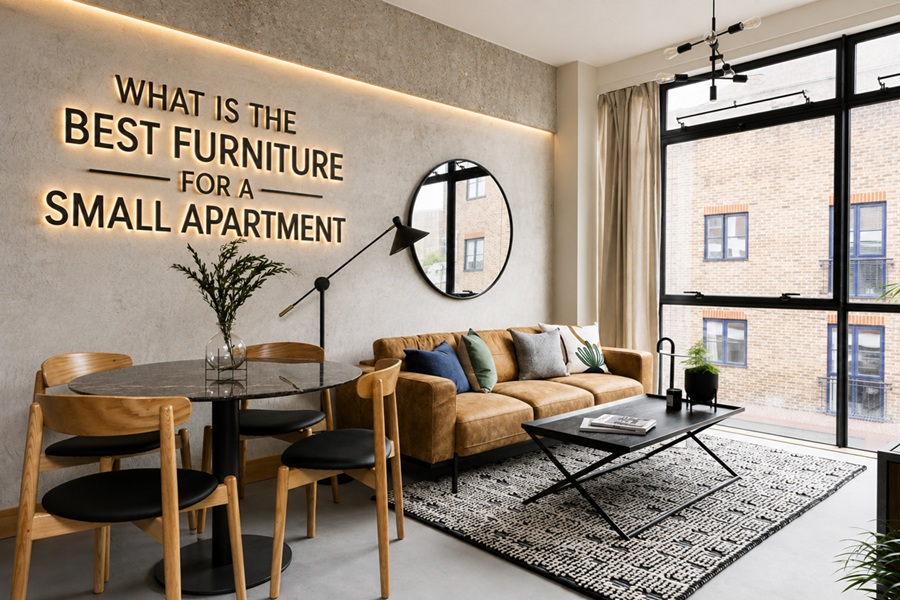
The best furniture for a small apartment is furniture that saves space, serves more than one purpose, and fits the room properly. In a compact home, every piece needs to earn its place. A bulky sofa, oversized dining table, or heavy storage cabinet can quickly make the apartment feel cramped. But the right furniture can make even a small space feel comfortable, organized, and stylish.
Small-apartment living is not about giving up comfort. It is about choosing pieces that work smarter. Think sleeper sofas, storage ottomans, beds with drawers, nesting tables, wall-mounted desks, and slim furniture that gives you function without taking over the room.
If you are furnishing a studio, one-bedroom apartment, or any compact space, this guide will help you choose furniture that makes your home feel open, practical, and easy to live in.
What Makes Furniture Good for a Small Apartment?
Furniture for a small apartment should do three things well: save space, add function, and fit the scale of the room.
In a large home, you may have space for separate pieces for every need: a guest bed, office desk, dining table, storage cabinet, and extra seating. In a small apartment, you may not have that luxury. That is why multifunctional furniture is so useful. One piece can often do the job of two or three.
Good small-apartment furniture usually has at least one of these qualities:
- It has built-in storage.
- It can fold, expand, or tuck away.
- It serves more than one purpose.
- It is slim and appropriately sized.
- It keeps the floor area open.
- It helps reduce clutter.
The goal is to create a home that feels comfortable, not crowded. You want enough furniture to support your daily life, but not so much that the apartment feels packed.
Start by Measuring Your Space
Before buying anything, measure your apartment carefully. This may sound obvious, but it is one of the most important steps. A sofa that looks small in a showroom may feel huge in your living room. A dining table that seems compact online may block the walkway once chairs are added.
Measure each room, including wall lengths, window placement, doors, outlets, radiators, and any awkward corners. Also measure doorways, stairs, elevators, and hallways to make sure large furniture can actually be delivered.
It helps to create a simple floor plan. You can sketch it on paper or use a room-planning app. Mark where the main furniture will go and leave enough room for walking paths. In a small apartment, flow matters. You should be able to move around without squeezing between pieces.
Choose a Sofa That Works Hard
The sofa is often the largest piece in a small apartment, so choose it carefully. A huge sectional may look cozy, but it can overwhelm the room if the space is limited.
For small apartments, good sofa options include:
- A compact two- or three-seat sofa
- A loveseat
- A sleeper sofa
- A modular sofa
- A sofa with storage underneath
- A sofa with raised legs for a lighter look
A sleeper sofa is especially useful if you do not have a guest room. It gives you everyday seating and a place for overnight guests. If you live in a studio apartment, a sleeper sofa can also help your space function as both a living room and bedroom.
Look for clean lines and slim arms. Sofas with wide rolled arms take up more space without adding much seating. A sofa raised on legs can make the room feel more open because you can see more of the floor underneath.
Use Storage Ottomans Instead of Extra Tables
A storage ottoman is one of the most useful pieces of furniture for a small apartment. It can work as a footrest, extra seat, coffee table, and hidden storage all at once.
You can use it to store:
- Blankets
- Books
- Games
- Remote controls
- Workout gear
- Extra pillows
- Seasonal items
If you want it to function as a coffee table, add a tray on top for drinks or decor. Choose an ottoman that is light enough to move around when needed. Round ottomans are great for softening a small room, while rectangular ones work well in front of a sofa.
Pick a Bed With Built-In Storage
Bedrooms in small apartments often have limited closet space. A bed with built-in drawers can make a huge difference. Instead of wasting the space under the mattress, you can use it for clothing, bedding, shoes, or seasonal items.
Good options include:
- Platform beds with drawers
- Lift-up storage beds
- Beds with shelves in the headboard
- Daybeds with storage
- Murphy beds for studio apartments
A lift-up storage bed is useful if you need a large hidden compartment. Drawer beds are easier for everyday access, but you need enough room on the sides to pull the drawers open.
If you live in a studio, a Murphy bed can be a smart choice. It folds up against the wall when not in use, freeing up floor space during the day. However, Murphy beds can be more expensive and may require professional installation.
Choose Flexible Dining Furniture
A full-size dining table may not be realistic in a small apartment, but you can still create a comfortable place to eat. The best dining furniture depends on how often you use the space and how many people you usually seat.
Good small-space dining options include:
- Drop-leaf tables
- Extendable tables
- Round pedestal tables
- Wall-mounted folding tables
- Small bistro tables
- Bar-height tables with stools
A drop-leaf table is one of the best choices because it can stay compact for everyday meals and open up when you need more surface area. An extendable table works well if you host guests occasionally but do not want a large table taking up space all the time.
For very small apartments, consider a wall-mounted folding table. It can serve as a dining spot, desk, or prep surface, then fold flat when not needed.
Pair your table with chairs that tuck fully underneath or stools that can slide away. Avoid bulky dining chairs with arms unless you have enough room.
Use Nesting Tables and Lightweight Pieces
Nesting tables are perfect for small apartments because they give you extra surface space only when you need it. Keep them stacked together most of the time, then pull them apart when guests come over or when you need a place for snacks, drinks, or a laptop.
Lightweight furniture is also helpful. Small apartments often need flexibility, so pieces that are easy to move can make the space more adaptable. A small side table can become a nightstand, plant stand, or extra surface beside the sofa. A stool can be seating, a bedside table, or a place to set a tray.
The more flexible your furniture is, the easier it is to make the apartment work for different needs.
Think Vertically for Storage
When floor space is limited, use the walls. Vertical storage helps keep the apartment organized without taking up valuable floor area.
Consider:
- Tall bookcases
- Floating shelves
- Wall-mounted cabinets
- Over-the-door organizers
- Peg rails or hooks
- Tall wardrobes
- Ladder shelves
A tall narrow bookshelf can hold books, baskets, decor, and everyday items without taking up much room. Floating shelves are useful above desks, sofas, beds, and dining areas.
Be careful not to overcrowd the walls. Too many shelves packed with items can make the apartment feel busy. Use baskets, boxes, and closed storage to keep things visually calm.
Choose Furniture With a Light Visual Feel
Furniture does not only take up physical space. It also takes up visual space. Heavy, dark, bulky pieces can make a small apartment feel smaller, while lighter designs help the room feel open.
Look for furniture with:
- Slim profiles
- Raised legs
- Open shelving
- Glass or acrylic surfaces
- Light wood tones
- Soft neutral fabrics
- Simple shapes
This does not mean everything has to be white or minimal. You can still use color and personality. The key is to avoid too many heavy pieces in one room.
For example, a dark sofa can work if you pair it with slim tables, light curtains, and open shelving. Balance is what matters.
Do Not Overfill the Apartment
One of the biggest mistakes in a small apartment is trying to fit in too much furniture. You may want a sofa, two chairs, a coffee table, a dining table, a desk, a bookshelf, and several cabinets, but the space may not support all of that comfortably.
Start with the essentials:
- A place to sleep
- A place to sit
- A place to eat or work
- Storage for daily items
Once those needs are covered, add extra pieces only if there is room. A small apartment feels better with fewer well-chosen items than with too many pieces squeezed together.
Best Furniture Pieces for a Small Apartment
Here are some of the most useful furniture choices for small-space living:
- Sleeper sofa
- Storage ottoman
- Bed with drawers
- Drop-leaf dining table
- Nesting tables
- Wall-mounted desk
- Folding chairs
- Tall shelving unit
- Storage bench
- Compact loveseat
- Murphy bed
- Slim media console
- Modular furniture
- Floating shelves
You do not need all of these. Choose the pieces that match your lifestyle and apartment layout.
Final Thoughts
The best furniture for a small apartment is practical, flexible, and properly scaled. Look for pieces that save space, provide storage, and serve more than one purpose. A sleeper sofa, storage ottoman, drawer bed, nesting table, or drop-leaf dining table can make a compact home much easier to live in.
Before buying, measure your space and think about how you use each room. Choose furniture that supports your daily routine without overcrowding the apartment. Keep the layout open, use vertical storage, and avoid pieces that are too large for the room.
With smart choices, a small apartment can feel comfortable, organized, and stylish. The secret is not having more furniture. It is choosing furniture that works harder for the space you have.