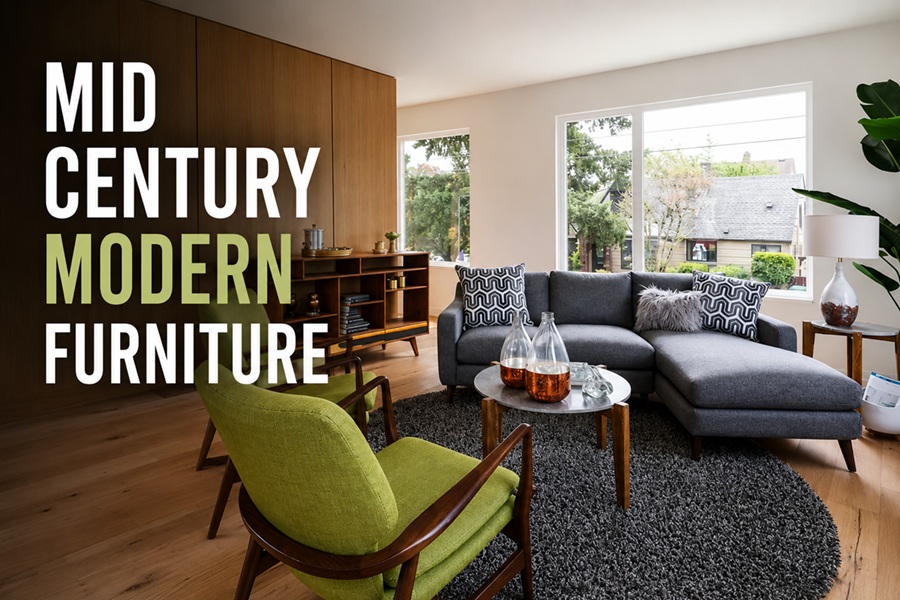
Mid century modern furniture is a design style that emerged roughly between the 1940s and 1960s, defined by clean lines, gentle organic curves, tapered legs, and a focus on function without fuss. It favours natural materials like teak, walnut, and leather, blended with newer materials of the era such as molded plywood, fiberglass, and steel. The result is furniture that feels simple, warm, and timeless, which is exactly why it has never really gone out of style.
If you have ever admired a low, elegant sofa on slim wooden legs or a sculptural lounge chair and wondered what to call that look, this is it. The style prizes uncluttered form and honest materials over ornamentation. This guide breaks down what defines mid century modern, the materials and iconic pieces that anchor it, how to tell authentic from reproduction, and how to bring the look into your own home.
| Era | Roughly 1940s to 1960s |
| Defining traits | Clean lines, organic curves, tapered legs |
| Common materials | Teak, walnut, plywood, fiberglass, leather |
| Philosophy | Function and simplicity over ornament |
| Iconic pieces | Lounge chairs, low sideboards, egg-shaped seats |
| Color palette | Warm woods with mustard, teal, olive, and orange |
| Still popular because | Timeless, versatile, and easy to mix |
| Where to buy | Vintage shops, estate sales, reproductions |
What Defines the Style
At its core, mid century modern is about paring things back. Designers of the era reacted against heavy, ornate furniture by stripping away excess and letting form and material speak for themselves. A piece is judged by how well it works and how cleanly it is made, not by how much decoration it carries.
That philosophy produced furniture that is light in appearance, often raised on slender legs so it seems to float above the floor. Curves are organic and sculptural rather than fussy, and every element tends to serve a purpose. It is a look that feels modern decades later precisely because it was never tied to a trend.
Key Characteristics
- Clean, straight lines balanced with soft, organic curves
- Tapered or splayed legs that lift furniture off the ground
- A focus on function, with little unnecessary ornamentation
- Natural wood tones, especially warm teak and walnut
- A mix of traditional and then-new materials like plywood and fiberglass
- Bold accent colors set against neutral, wood-forward bases
The Materials That Matter
Material is central to the mid century look, and understanding the common ones helps you recognize and care for pieces. The era famously married warm woods with experimental new materials.
| Material | Where It Appears | Character |
| Teak and walnut | Tables, cabinets, chair frames | Warm, rich, durable |
| Molded plywood | Chair shells and seats | Light and sculptural |
| Fiberglass | Molded shell chairs | Smooth and colorful |
| Leather | Lounge chairs and sofas | Ages beautifully |
| Steel and chrome | Legs and bases | Slim and industrial |
Iconic Pieces and Designers
A handful of designers defined the movement, and their pieces remain the reference points collectors chase. Charles and Ray Eames created molded plywood and fiberglass chairs, including the celebrated lounge chair and ottoman that still anchors countless living rooms. Isamu Noguchi designed a sculptural glass-topped coffee table that became a style icon in its own right.
Scandinavian and American designers alike contributed low sideboards, spindle-backed dining chairs, and egg-shaped lounge seats that captured the era’s blend of comfort and clean form. You do not need original designer pieces to get the look, but knowing these touchstones helps you recognize the shapes that define the style.
Authentic vs Reproduction
As the style surged back into fashion, the market filled with both genuine vintage pieces and modern reproductions. Neither is wrong; it depends on your budget and goals. Original vintage furniture carries authenticity, patina, and collectible value, but commands higher prices and may need restoration. Reproductions offer the look at a friendlier price with the durability of new construction.
- Check for solid wood and quality joinery on pieces claiming to be vintage
- Look for maker’s marks, labels, or documented provenance on originals
- Expect some honest wear on genuine vintage; flawless often means new
- Weigh whether collectible value or everyday practicality matters more to you
How to Use It in Your Home
The beauty of mid century modern is how easily it mixes. You do not need a whole room of it; a few well-chosen pieces bring the look without turning your home into a museum. Anchor a space with one statement item, such as a lounge chair or a sideboard, then let simpler pieces support it.
Keep the backdrop clean and let warm wood tones do the work. Layer in the era’s signature accent colors, mustard, teal, olive, and burnt orange, through cushions, rugs, or art rather than large furniture, so the palette feels fresh rather than themed. Pairing mid century pieces with contemporary or even traditional items keeps a room from feeling like a costume and lets the style breathe.
Mid Century vs Other Styles
| Style | Look | Key Difference |
| Mid century modern | Warm wood, clean curves | Organic, timeless simplicity |
| Contemporary | Current and evolving | Follows present-day trends |
| Industrial | Metal, raw, utilitarian | Rugged over warm |
| Traditional | Ornate, classic detail | Decoration over minimalism |
Where to Find It
Genuine vintage turns up at estate sales, thrift and consignment shops, dedicated mid century dealers, and online resale marketplaces. Patience and a good eye pay off, since real finds can surface anywhere. For reproductions and mid century-inspired pieces, many mainstream and design-focused retailers now carry the look, making the aesthetic accessible at almost any budget.
Caring for Wood Pieces
The warm woods that define the style reward a little care. Keep pieces out of direct sunlight, which fades and dries wood over time, and away from heat sources and radiators. Dust regularly and treat solid wood with an appropriate oil or wax now and then to nourish the grain. Blot spills quickly so moisture does not sink in, and use coasters and pads to protect surfaces from rings and scratches.
Frequently Asked Questions
What years count as mid century modern?
The style is generally placed between the 1940s and 1960s, with some flexibility on either side. What matters more than exact dates is the design language of clean lines, organic curves, and functional simplicity.
Is mid century modern furniture still in style?
Very much so. Its timeless, uncluttered look and easy mixability have kept it popular for decades, and it shows no sign of fading. That staying power is part of why it is considered a design classic rather than a trend.
How can I tell if a piece is authentic?
Look for solid wood, quality joinery, maker’s marks or labels, and honest signs of age. Documented provenance helps confirm valuable originals, while flawless, mass-produced construction usually points to a newer reproduction.
Do I need a whole room of it?
Not at all. A few statement pieces mixed with other styles often looks best, giving you the warmth and character of mid century modern without the room feeling like a themed set.
Getting the Look on a Budget
You do not need original designer pieces or a big budget to capture the mid century feel. The style is built on shapes and proportions more than labels, so the trick is to buy for silhouette. A dresser with tapered legs and clean drawer fronts, or a sofa with a low profile and slim wooden arms, delivers the look at a fraction of the price of a signed original.
Secondhand shopping is your best friend here. Estate sales, thrift stores, and online resale listings are full of genuine period pieces that sellers do not always recognize, and a solid teak sideboard can turn up for a bargain if you are patient. Even a dated piece with good bones can be refreshed: reupholstering a well-shaped chair or refinishing a scratched wood surface often costs far less than buying new and gives you a one-of-a-kind result.
Mixing in a few affordable reproduction accents, a molded shell chair here, a spindle-legged side table there, rounds out the look without overspending. Because mid century pieces mix so happily with what you already own, you can build the aesthetic gradually, one considered purchase at a time, rather than replacing everything at once. That slow, deliberate approach often produces a more personal and characterful result than buying a matched set all in one go.
Final Thoughts
Mid century modern furniture endures because it gets the fundamentals right: clean form, honest materials, and comfort without clutter. Whether you hunt down genuine vintage or choose well-made reproductions, the key is to let a few strong pieces anchor a space, keep the backdrop simple, and add the era’s warm accent colors in small doses. Do that, and you get a home that feels both effortlessly stylish and genuinely livable, decade after decade.