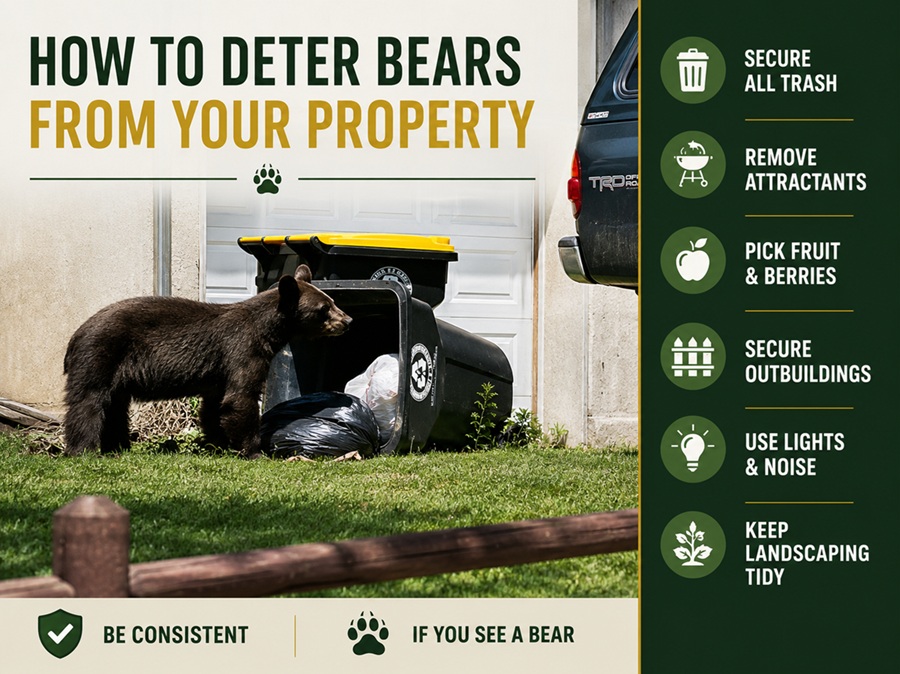
The single most effective way to deter bears from your property is to remove what draws them in: food. Bears have an extraordinary sense of smell and visit properties in search of easy calories, so securing garbage, taking down bird feeders, cleaning grills, and locking away pet food removes the reward that keeps them coming back. A property with no accessible food is far less interesting to a bear, and that prevention does more than any gadget or noise-maker.
Bears are powerful, intelligent animals, and once one learns your property is a reliable food source, it will return and grow bolder, which is dangerous for both the bear and your household. The goal is to make your property unrewarding and, where needed, mildly unwelcoming, without ever cornering or confronting the animal. This guide covers the attractants to eliminate, the deterrents that work, and the safety practices that keep everyone protected.
| Number one rule | Remove all food attractants |
| Biggest attractant | Unsecured garbage |
| Other draws | Bird feeders, pet food, grills, fruit trees |
| Best deterrent | A clean property with no food reward |
| Effective barrier | Electric fencing for gardens or hives |
| Never do | Feed, corner, or approach a bear |
| If a bear appears | Make noise from a safe distance; give it space |
| Key principle | A fed bear becomes a problem bear |
Why Bears Come Onto Properties
Bears are driven overwhelmingly by their stomachs. With a sense of smell many times stronger than a dog’s, they can detect food from a great distance, and they are smart enough to remember exactly where they found an easy meal. A property offering unsecured trash, a full bird feeder, or a greasy grill is essentially advertising free food, and a bear that succeeds once will make your home a regular stop.
This is why the phrase “a fed bear is a dead bear” exists among wildlife officials. Bears that lose their natural wariness and associate people with food become bold, and boldness leads to conflict that too often ends with the animal being destroyed. Deterring bears is therefore as much about protecting them as protecting your property.
Remove the Attractants First
Before reaching for any deterrent device, eliminate the things that draw bears in. This step alone resolves the vast majority of bear problems, because a property with no food reward is simply not worth a bear’s time.
- Store garbage in a secured shed or a certified bear-resistant container
- Put trash out the morning of collection, never the night before
- Take down bird feeders during bear season, or hang them out of reach
- Never leave pet food or dishes outside
- Clean grills after every use and burn off residue
- Pick ripe fruit promptly and clear fallen fruit from the ground
- Keep compost enclosed and free of meat, fish, and fats
Secure the Biggest Magnet: Garbage
If you do only one thing, lock down your garbage, because it is the number-one reason bears visit homes. Ordinary bins are trivial for a bear to open, so store trash inside a garage or sturdy shed until collection day, or invest in a bear-resistant container certified to withstand them. Timing matters too: putting bins out the night before collection gives bears an all-night buffet, while setting them out the morning of pickup removes the overnight temptation entirely.
Deterrents That Actually Work
Once attractants are gone, physical deterrents can add a layer of protection for specific targets like gardens, beehives, chicken coops, or fruit trees. The most reliable is electric fencing, which teaches a bear a harmless but memorable lesson to stay away and is widely used to protect livestock and gardens in bear country.
| Deterrent | Best Use | Notes |
| Electric fencing | Gardens, hives, coops | The most reliable barrier |
| Motion-activated lights | Yards and entry points | Startles; bears may adapt |
| Motion-activated sprinklers | Gardens and lawns | Sudden water deters |
| Noise makers | Encouraging a bear to leave | Use from a safe distance |
| Sturdy enclosures | Trash, chickens, feed | Physical prevention |
It is worth knowing that bears are clever and can habituate to deterrents that pose no real consequence, like lights or sounds they learn to ignore. That is why removing food is the foundation, with deterrents as a supplement rather than a substitute.
What to Do if a Bear Shows Up
If a bear does appear on your property, stay calm and prioritize safety over your belongings. From inside or a safe distance, you can encourage it to move on by making yourself known, but you should never approach, corner, or crowd the animal, especially if cubs are present.
- Keep a safe distance and bring children and pets indoors
- Make noise from safety, shout, clap, or bang pots, to encourage it to leave
- Give the bear a clear, unobstructed escape route
- Never approach, corner, feed, or attempt to touch a bear
- Remove the attractant that drew it in once it is gone
- Contact local wildlife authorities if a bear is persistent or aggressive
Long-Term Coexistence
Living in bear country is about consistency. A property kept free of attractants year after year rarely has bear problems, while a single lapse, one weekend of trash left out, can undo months of good habits and invite a bear back. Encouraging neighbours to follow the same practices helps too, since a bear drawn to any nearby food source will roam the whole area. Treat attractant control as a permanent routine, not a one-time fix, and you protect your household and the bears alike.
Frequently Asked Questions
What attracts bears to a property the most?
Food, above everything. Unsecured garbage is the biggest magnet, followed by bird feeders, pet food, dirty grills, and fruit trees. Removing these attractants is the most effective way to keep bears away.
Do noise and lights keep bears away?
They can help in the short term, but bears are smart and may learn to ignore deterrents that carry no real consequence. They work best as a supplement to removing food, not as a replacement for it.
Does electric fencing stop bears?
Yes, electric fencing is one of the most reliable barriers for protecting gardens, beehives, and coops. It delivers a harmless but memorable deterrent that teaches bears to keep their distance.
What should I do if a bear is in my yard?
Keep a safe distance, bring children and pets inside, and make noise from safety to encourage it to leave while giving it an escape route. Never approach or corner it, and call wildlife authorities if it is persistent or aggressive.
What time of year are bears most active?
From spring, when they emerge hungry, through autumn, when they eat intensively to prepare for winter. Late summer and fall are peak foraging, so attractant control matters most across the warm months.
Are bird feeders really a problem?
Yes, they are a major attractant, since seed and suet are exactly the high-calorie food bears seek. Taking feeders down during the active season, or hanging them well out of reach, removes a common draw.
Should I use bear spray at home?
Bear spray is a safety tool for close encounters, not a property deterrent. The priority at home is removing food attractants and keeping a safe distance; contact wildlife authorities about persistent bears.
Staying Alert Through the Seasons
Bear activity is not constant, and matching your vigilance to their yearly rhythm makes prevention easier. The riskiest stretch is spring through autumn. In spring, bears emerge hungry from their dens and forage aggressively, while in late summer and autumn they enter a phase of intense eating to build fat reserves before winter, making them especially bold around food during those months.
That seasonal pattern is exactly why habits like taking down bird feeders and locking up trash matter most from spring through fall. A property that stays attractant-free during the active season rarely develops a problem, whereas letting your guard down for even a weekend at the peak of foraging can invite a bear back. Treat the warm months as high-alert time and build the routines into your schedule.
- Expect hungry, active bears from spring through autumn
- Be extra vigilant in late summer and fall foraging season
- Remove bird feeders during the active months
- Never relax trash security at the peak of the season
- Coordinate with neighbours so the whole area stays clean
Final Thoughts
Deterring bears comes down to a simple truth: no food, no bears. Secure your garbage, remove feeders and pet food, clean your grill, and manage fruit and compost, and your property stops being a destination. Add electric fencing to protect specific targets, keep deterrents as a backup, and never feed or confront a bear. Practiced consistently, these habits keep your household safe and spare the bears the fate that follows once they learn to rely on people for food.