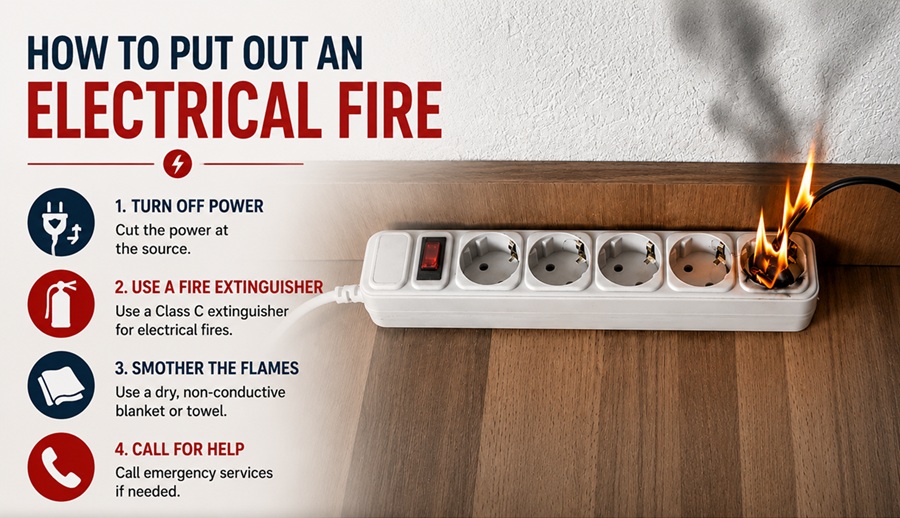
To put out an electrical fire safely, the first and most important rule is never to use water, because water conducts electricity and can cause electrocution or spread the fire. Instead, if it is safe, cut the power at the source or breaker, then smother a small fire using a Class C or multipurpose ABC fire extinguisher, or baking soda for a very small flame. If the fire is spreading, you cannot control it quickly, or you are in any doubt, get everyone out immediately and call emergency services. Your safety always comes before saving property.
Electrical fires start in wiring, outlets, appliances, and cords, and they behave differently from ordinary fires because live electricity is involved. Knowing the right response, and the deadly mistake of throwing water on one, can protect your home and your life. This guide walks through exactly what to do, what never to do, and how to prevent electrical fires in the first place.
| First rule | Never use water on an electrical fire |
| Step one | Cut the power at the source or breaker if safe |
| Right extinguisher | Class C or multipurpose ABC |
| Small-flame option | Baking soda can smother a tiny fire |
| If it spreads | Evacuate immediately and call emergency services |
| Never | Throw water or use a water extinguisher |
| Priority | People first, property second |
| Prevention | Avoid overloaded outlets and damaged cords |
Why Water Is So Dangerous Here
The instinct with any fire is to reach for water, but on an electrical fire that instinct can be fatal. Water conducts electricity, so pouring it on a live electrical fire can send current straight back to you, causing a serious or deadly shock. It can also fail to extinguish the fire and instead spread it. This is the single most important thing to understand about electrical fires, and it is why every step below revolves around removing power and using the right smothering method rather than water.
Step by Step: What to Do
If you discover a small electrical fire and choose to act, move quickly and calmly through these steps. At any point that the fire grows beyond your control, stop and evacuate.
- Cut the power if you can do so safely, by unplugging the device or switching off the circuit at the breaker panel.
- Never use water or a water-based extinguisher on the fire.
- Use a Class C or multipurpose ABC fire extinguisher aimed at the base of the flames.
- For a very small flame, smothering with baking soda can work if an extinguisher is not to hand.
- If the fire is small, contained, and clearly going out, keep watching it until you are certain it is fully extinguished.
- If the fire spreads, you cannot control it, or you are unsure, get everyone out and call emergency services from outside.
The Right Fire Extinguisher
Fire extinguishers are rated by class for different fire types, and using the correct one matters. Electrical fires are Class C, so you need an extinguisher rated for that. The most practical choice for a home is a multipurpose ABC extinguisher, which handles ordinary combustibles, flammable liquids, and electrical fires all in one.
| Extinguisher | Suitable For | Use on Electrical Fire? |
| Class C | Electrical fires | Yes |
| Multipurpose ABC | Most common home fires | Yes, recommended for homes |
| Class A / water | Ordinary combustibles only | No, dangerous on electrical |
| Baking soda | Very small flames | Yes, for tiny fires only |
When to Evacuate Instead
Fighting a fire yourself is only ever appropriate when it is very small, contained, and you have the right extinguisher and a clear escape route behind you. The moment any of that is not true, evacuation is the correct choice, not a failure. Leave immediately if the fire is spreading, if there is significant smoke, if you cannot cut the power safely, if your extinguisher is not working, or if you feel unsure at all. Once out, stay out, and call emergency services from a safe location. No possession is worth risking your life for.
What Never to Do
- Never throw water or use a water extinguisher on an electrical fire
- Never touch a burning appliance or wire with bare hands
- Never keep fighting a fire that is spreading or producing heavy smoke
- Never re-enter a building you have evacuated to fight the fire or retrieve items
- Never ignore a small burning smell or sparking outlet, which can signal danger
Preventing Electrical Fires
The best way to deal with an electrical fire is to prevent it, and most are avoidable with sensible habits. Do not overload outlets or run too many high-draw devices on one circuit, and avoid daisy-chaining power strips. Replace frayed or damaged cords rather than taping them, and never run cords under rugs where heat can build. Pay attention to warning signs like flickering lights, warm or discolored outlets, buzzing sounds, or a burning smell, and have an electrician investigate them. Working smoke alarms and a home fire extinguisher are essential backups.
- Avoid overloading outlets and power strips
- Replace damaged or frayed cords immediately
- Never run cords under rugs or furniture
- Investigate flickering lights, warm outlets, or burning smells
- Keep working smoke alarms and an ABC extinguisher at home
- Have older or faulty wiring inspected by an electrician
Frequently Asked Questions
Can you put out an electrical fire with water?
No, never. Water conducts electricity and can cause electrocution and spread the fire. Always cut the power if safe and use a Class C or ABC extinguisher, or evacuate and call emergency services if the fire is not small and contained.
What kind of fire extinguisher works on electrical fires?
A Class C extinguisher is rated for electrical fires, and a multipurpose ABC extinguisher, recommended for homes, works on them too. Avoid water-based Class A extinguishers, which are dangerous on electrical fires.
What should I do first in an electrical fire?
If it is safe, cut the power by unplugging the device or switching off the circuit at the breaker. Removing the electricity reduces the danger. Then use the correct extinguisher on a small fire, or evacuate and call for help if it is not.
When should I just leave and call for help?
Evacuate immediately if the fire is spreading, there is heavy smoke, you cannot cut the power safely, your extinguisher fails, or you feel unsure. Get everyone out, stay out, and call emergency services from a safe place.
What causes most electrical fires at home?
Common causes include overloaded outlets and circuits, damaged or frayed cords, faulty or aging wiring, and misused appliances. Many are preventable with safe habits and by addressing warning signs promptly.
Should every home have a fire extinguisher?
Yes. A multipurpose ABC extinguisher that handles electrical fires is a smart safety essential for the home, alongside working smoke alarms. Keep it accessible and know how to use it before an emergency arises.
Appliance and Outlet Fire Specifics
Many household electrical fires start at a specific appliance, outlet, or cord, and the response has some particular points worth knowing. If an appliance catches fire and it is safe to reach the plug or breaker, cutting its power is the priority. For a fire inside an appliance like a microwave or oven, keeping the door closed can help starve the flames of oxygen while you cut power and prepare to evacuate if needed.
Outlet and wiring fires behind walls are especially dangerous because the fire may be larger than it appears, spreading through the wall cavity out of sight. If you see smoke or scorching around an outlet, or fire coming from inside a wall, treat it seriously: cut the power at the breaker if you safely can, and do not assume a small visible flame means a small fire. When a fire is in the walls, evacuating and calling emergency services is usually the right call.
Whatever the source, the same core rules apply throughout: never use water, cut the power when safe, use a Class C or ABC extinguisher on a small contained fire, and prioritize getting everyone out over saving the appliance. Appliances can be replaced; people cannot.
- Cut an appliance’s power at the plug or breaker if safe
- Keep an oven or microwave door closed to starve the flames
- Treat outlet and in-wall fires as potentially larger than they look
- Never assume a small visible flame means a small fire
- Prioritize evacuation over saving any appliance
Final Thoughts
The key to handling an electrical fire is knowing the one thing you must never do, use water, and the right thing to do instead: cut the power if safe and smother a small fire with a Class C or ABC extinguisher. Above all, put people first. If the fire is spreading or you are unsure, evacuate and call for help without hesitation. Better still, prevent electrical fires with safe outlet habits, sound cords, and attention to warning signs, backed by working smoke alarms and an extinguisher at home. This is a sensitive safety topic; if you have specific concerns about your home’s wiring, consult a licensed electrician or your local fire service.