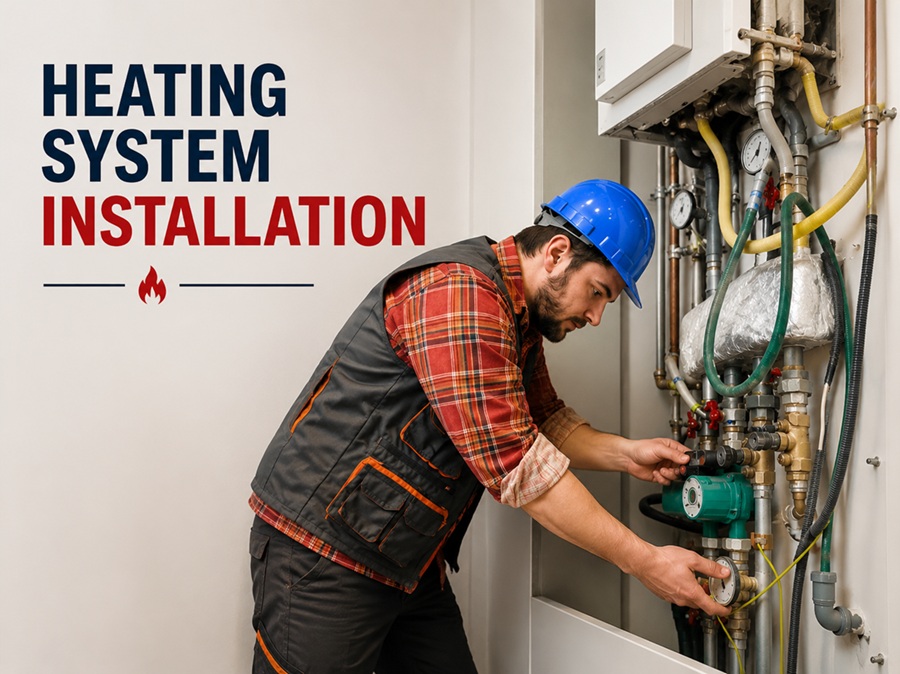
Heating system installation is the process of selecting, sizing, and professionally fitting a new heating system, most commonly a furnace, heat pump, or boiler, to warm your home efficiently and safely. The right system depends on your climate, home size, existing infrastructure, and budget, and correct sizing matters enormously: a unit too small will struggle, while one too large cycles inefficiently and wears out faster. Because it involves gas, electrical, or venting work, installation is almost always a job for licensed professionals rather than a DIY project.
A new heating system is a significant investment that affects your comfort and energy bills for a decade or more, so understanding the options and the process helps you make a confident decision. This guide walks through the main system types, how installation works step by step, the factors that drive cost, and how to choose a reliable installer, so you know what to expect before you commit.
| What it is | Selecting and professionally fitting a new heating system |
| Common types | Furnace, heat pump, and boiler |
| Key to performance | Correct sizing for the home |
| Who installs it | Licensed HVAC professionals |
| Timeline | Often one to a few days |
| Cost drivers | System type, size, efficiency, and ductwork |
| Efficiency measure | Higher-rated units cost more but save on bills |
| Lifespan | Commonly 15 to 20+ years with maintenance |
The Main Types of Heating Systems
Choosing the system is the first and biggest decision, and each type suits different homes and climates. Your existing setup, whether you have ducts, gas, or radiators, often points toward the most practical choice.
| System | How It Heats | Best For |
| Furnace | Blows heated air through ducts | Homes with ductwork, cold climates |
| Heat pump | Moves heat efficiently, heats and cools | Milder climates, all-in-one comfort |
| Boiler | Heats water for radiators or radiant floors | Homes with radiators or radiant heat |
| Ductless mini-split | Zoned heating and cooling, no ducts | Additions, homes without ductwork |
How the Installation Process Works
A professional installation follows a clear sequence, and knowing it helps you prepare and ask the right questions. It starts long before any equipment is fitted, with an assessment that sizes the system to your home.
- A technician assesses your home, its size, insulation, and existing setup, and calculates the correct system size.
- You review options for system type and efficiency, and receive a quote.
- The old system is safely removed and disconnected.
- The new unit is installed and connected to ducts, gas, electrical, or water as needed.
- The system is tested, calibrated, and checked for safe operation.
- The installer walks you through operation, the thermostat, and maintenance.
Why Correct Sizing Is Critical
One of the most important parts of installation happens before any equipment arrives: sizing. A proper load calculation considers your home’s square footage, insulation, windows, layout, and climate to determine the right capacity. An oversized system short-cycles, turning on and off too frequently, which wastes energy, wears out components, and leaves uneven temperatures. An undersized system runs constantly yet never quite keeps up on the coldest days. Getting the size right is what delivers efficient, even, reliable heat, which is a key reason to use a qualified installer who does the calculation properly rather than guessing.
What Drives the Cost
Installation cost varies widely based on several factors, so quotes for the same home can differ. Understanding the drivers helps you compare fairly and see where your money goes.
| Factor | Effect on Cost | Notes |
| System type | Large impact | Heat pumps and boilers vary widely |
| Size and capacity | Bigger costs more | Sized to the home |
| Efficiency rating | Higher rating, higher price | Saves on bills over time |
| Ductwork | Adds cost if new or modified | A major variable |
| Labour and complexity | Varies by job | Difficult installs cost more |
While a higher-efficiency system costs more upfront, it uses less energy, which lowers your bills over the system’s life and can offset the difference, especially in cold climates where the heat runs often.
Efficiency and Long-Term Savings
Heating systems carry efficiency ratings that tell you how much of the energy they consume actually becomes heat in your home. A more efficient unit costs more to buy but less to run, so the smart way to decide is to weigh the upfront price against the expected energy savings over the years you will own it. In colder regions where heating dominates the energy bill, investing in higher efficiency usually pays off. Ask your installer to explain the ratings and the likely running costs of each option so you can make the comparison.
Choosing a Reliable Installer
The quality of the installation matters as much as the equipment, because even a great unit performs poorly if fitted badly. Choose a licensed, insured HVAC contractor with strong reviews, and get more than one quote so you can compare both price and the proposed system. A good installer performs a proper load calculation rather than guessing, explains your options clearly, and stands behind the work with a warranty.
- Confirm the contractor is licensed and insured
- Get multiple detailed quotes to compare
- Ensure they perform a proper load calculation, not a guess
- Ask about equipment and labour warranties
- Check reviews and references for local reputation
- Make sure permits and code compliance are handled
Frequently Asked Questions
How long does heating system installation take?
Many installations are completed in one to a few days, depending on the system type and whether ductwork is being added or modified. A straightforward replacement is faster than a complex job requiring new ducts or fuel lines.
What size heating system do I need?
It should be determined by a professional load calculation based on your home’s size, insulation, windows, and climate, not a rough guess. Correct sizing avoids the inefficiency of an oversized unit and the shortfall of an undersized one.
Is a heat pump or furnace better?
It depends on your climate and setup. Heat pumps are highly efficient and provide both heating and cooling, suiting milder climates, while furnaces excel in very cold regions. A qualified installer can advise based on your home and area.
Can I install a heating system myself?
No, this is not a DIY job. Installation involves gas, electrical, or venting work with real safety and code implications, so it should always be done by a licensed HVAC professional to ensure it is safe and legal.
Does a new heating system come with a warranty?
Most do, typically separate warranties covering the equipment and the installation labour. Ask your installer to explain the length and terms of each, since a solid warranty is a sign of a quality system and installer.
Will a new efficient system really lower my bills?
A higher-efficiency system converts more of the energy it uses into heat, so it generally costs less to run, especially in cold climates where heating dominates the bill. The savings help offset the higher upfront price over time.
Preparing Your Home and Checking for Rebates
A little preparation smooths a heating system installation and can save money. Before installation day, clear a working path and space around the old and new equipment so the crew can move efficiently, and make sure they will have access to the areas they need, from the utility space to the thermostat location. Discuss any concerns about airflow or cold rooms in advance so the installer can address them.
It is also well worth investigating rebates and incentives before you buy. Many high-efficiency heating systems, particularly heat pumps, qualify for utility rebates or other efficiency incentives that can meaningfully lower the net cost. Your installer often knows what is available locally, and taking advantage of these can make a more efficient system surprisingly affordable compared with a basic one.
Finally, think about the thermostat. Pairing a new system with a programmable or smart thermostat lets you schedule temperatures and cut energy use, getting the most out of your investment. Ask your installer whether a thermostat upgrade is included or recommended, since the controls are what let an efficient system actually deliver its savings day to day.
- Clear access and space around the equipment beforehand
- Discuss cold rooms or airflow concerns with the installer
- Research utility rebates and efficiency incentives
- Ask whether a heat pump qualifies for local incentives
- Consider a programmable or smart thermostat upgrade
Final Thoughts
Heating system installation is a major decision that shapes your comfort and energy costs for many years, so it rewards careful planning. Choose the system type that fits your climate and home, insist on a proper load calculation for correct sizing, and weigh efficiency against upfront cost with an eye on long-term savings. Above all, hire a licensed, well-reviewed installer and compare quotes. Done right, a new heating system delivers reliable, efficient warmth you can count on for well over a decade.