
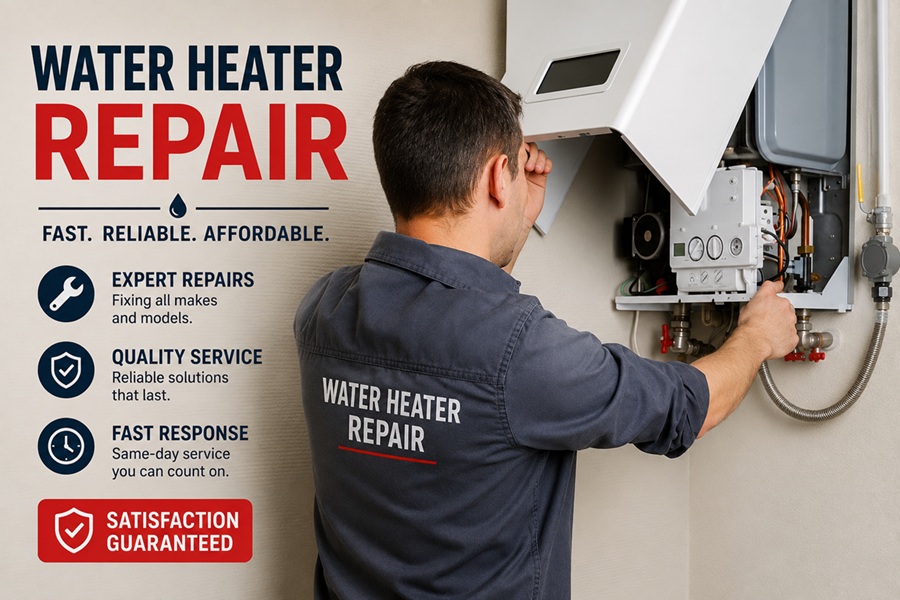
Water heater repair covers fixing the common faults that leave you with no hot water, not enough hot water, discolored or smelly water, strange noises, or leaks. Many issues trace back to a handful of culprits, a failed heating element or thermostat on electric units, a faulty pilot or gas valve on gas units, sediment buildup, or a worn part, and some are simple fixes while others call for a professional. Knowing which is which saves you money and helps you avoid a cold-shower emergency.
A water heater is easy to take for granted until it fails, and because it involves electricity or gas plus pressurized hot water, safety matters. This guide breaks down the most common problems and their likely causes, what a handy homeowner can safely tackle, when to call a plumber, typical costs, and how to decide between repairing and replacing the unit.
| Common symptoms | No hot water, too little, leaks, noise, bad odor |
| Frequent causes | Element/thermostat, pilot/gas valve, sediment |
| DIY-friendly | Resetting, relighting pilot, flushing sediment |
| Call a pro for | Leaks from the tank, gas issues, wiring |
| Big warning sign | Water pooling under or leaking from the tank |
| Maintenance | Annual flushing and anode rod checks |
| Typical lifespan | Around 8 to 12 years for a tank heater |
| Key decision | Repair vs replace based on age and cost |
Common Problems and Their Causes
Most water heater complaints fall into a few recognizable categories, and identifying the symptom points you toward the likely cause. This is the first step in any repair.
| Symptom | Likely Cause | Notes |
| No hot water | Tripped breaker, failed element, pilot out | Electric vs gas differs |
| Not enough hot water | Undersized tank, sediment, thermostat | Sediment steals capacity |
| Discolored or smelly water | Corroding anode rod or bacteria | Anode rod often the fix |
| Rumbling or popping noise | Sediment buildup in the tank | Flushing usually helps |
| Water leaking | Valve, connection, or tank failure | Tank leak means replace |
What You Can Often Fix Yourself
Some water heater issues are genuinely DIY-friendly and worth trying before calling a professional, provided you follow safety steps like cutting power or gas first. These simple checks resolve a surprising number of problems.
- Reset a tripped circuit breaker or the unit’s reset button on electric heaters
- Relight the pilot light on a gas heater following the manufacturer’s instructions
- Flush the tank to clear sediment that causes noise and reduces capacity
- Adjust the thermostat if water is too hot or not hot enough
- Check and replace a corroded anode rod to fight rust and odor
When to Call a Professional
Other problems are jobs for a licensed plumber, both for safety and to avoid making things worse. Any leak from the tank itself is a serious sign, since it usually means internal corrosion that cannot be repaired and points to replacement. Gas-related issues, persistent pilot failures, gas smells, or valve problems, should always go to a professional because of the risk. Electrical faults beyond a simple reset, and any repair you are not confident performing safely, also warrant a call. When in doubt, err toward professional help, since hot water under pressure and gas or electricity are not forgiving.
Typical Repair Costs
Repair costs vary with the problem and your location, but knowing the general ranges helps you judge a quote and weigh repair against replacement. Small part swaps are inexpensive, while major issues approach the cost of a new unit.
| Repair | Relative Cost | Notes |
| Thermostat or element | Lower | Common, affordable electric fixes |
| Pilot or thermocouple | Lower to moderate | Gas heater components |
| Anode rod replacement | Lower | Extends tank life |
| Tank flush / maintenance | Low | Often DIY or a small service fee |
| Tank replacement | Highest | A leaking tank means a new heater |
Repair or Replace?
When a repair gets expensive, the age of the unit decides the smart move. A tank water heater commonly lasts about eight to twelve years, so if yours is near or past that range and faces a costly repair, replacement is usually the better investment. A newer unit with a minor fault is worth repairing. The classic tipping point is a leaking tank, which cannot be repaired and signals the end of the heater’s life. Weigh the repair cost against the unit’s age and the price and efficiency of a new model.
Preventing Future Problems
A little maintenance keeps a water heater healthy and heads off many repairs. Flushing the tank once a year clears the sediment that causes noise, reduces capacity, and shortens the unit’s life. Checking the anode rod periodically and replacing it when worn protects the tank from corrosion, which is the single biggest factor in how long the heater lasts. Setting a sensible temperature and keeping the area around the unit clear also help it run safely and efficiently for years.
Frequently Asked Questions
Why do I suddenly have no hot water?
On an electric heater, check for a tripped breaker or reset button and a failed element or thermostat. On a gas heater, the pilot light may be out. If simple checks do not restore heat, call a professional to diagnose the fault.
Is a leaking water heater dangerous?
A leak from the tank itself is serious and usually means the unit needs replacing, and it can cause water damage. Turn off the water and power or gas to the heater and call a plumber promptly to assess it.
How long should a water heater last?
A conventional tank water heater typically lasts around eight to twelve years. Regular maintenance like flushing and anode rod checks helps it reach the upper end, while neglect and hard water shorten its life.
Can I repair a water heater myself?
Some tasks like resetting, relighting a pilot, flushing sediment, or adjusting the thermostat are DIY-friendly with proper safety precautions. Gas issues, tank leaks, and electrical faults beyond a reset should be left to a licensed professional.
What temperature should I set my water heater to?
A moderate setting balances comfort, safety, and efficiency, hot enough for your needs without scalding risk or wasted energy. If the water is too hot or not hot enough, adjusting the thermostat is a simple first step.
Why is my water heater making noise?
Rumbling or popping usually means sediment has built up at the bottom of the tank. Flushing the tank clears the sediment, which quiets the noise and restores capacity and efficiency.
Is a small water heater leak an emergency?
A leak from a valve or fitting may be a repairable connection, but water pooling from the tank body itself signals internal failure and the need for replacement. Either way, shut off the water and power or gas and have it assessed promptly to avoid damage.
Safety Steps Before Any Repair
Before attempting even a simple water heater repair, safety has to come first, because these units combine electricity or gas with pressurized hot water. For an electric heater, always switch off the power at the circuit breaker before touching any components, and confirm it is off. For a gas heater, know how to shut off the gas supply and never work around a suspected gas leak; evacuate and call the gas company if you smell gas.
Hot water itself is a hazard. The water inside and coming from the heater can be scalding, so take care whenever you open valves or drain the tank, and let water cool where appropriate. When flushing sediment, direct the hot water safely to a drain and keep hands and skin clear of the flow.
If at any point a repair feels beyond your comfort, or involves gas, significant electrical work, or a leaking tank, stop and call a licensed professional. There is no shame in it; water heaters cause serious injuries and water damage every year, and a plumber’s expertise is far cheaper than an accident or a flooded home. Knowing your limits is part of doing the job safely.
- Switch off the breaker before any electric heater work
- Know how to shut off the gas, and never work near a gas leak
- Treat the water as scalding when draining or flushing
- Direct drained hot water safely to a drain
- Stop and call a pro for gas, major electrical, or tank leaks
Final Thoughts
Most water heater problems come down to a few usual suspects, and knowing them lets you fix the simple ones yourself and recognize when to call a plumber. Try the safe DIY checks for no-hot-water and noise issues, but treat tank leaks, gas faults, and serious electrical problems as professional jobs. Weigh costly repairs against the unit’s age, keep up with annual flushing and anode checks, and your water heater will deliver reliable hot water for years before it needs replacing.