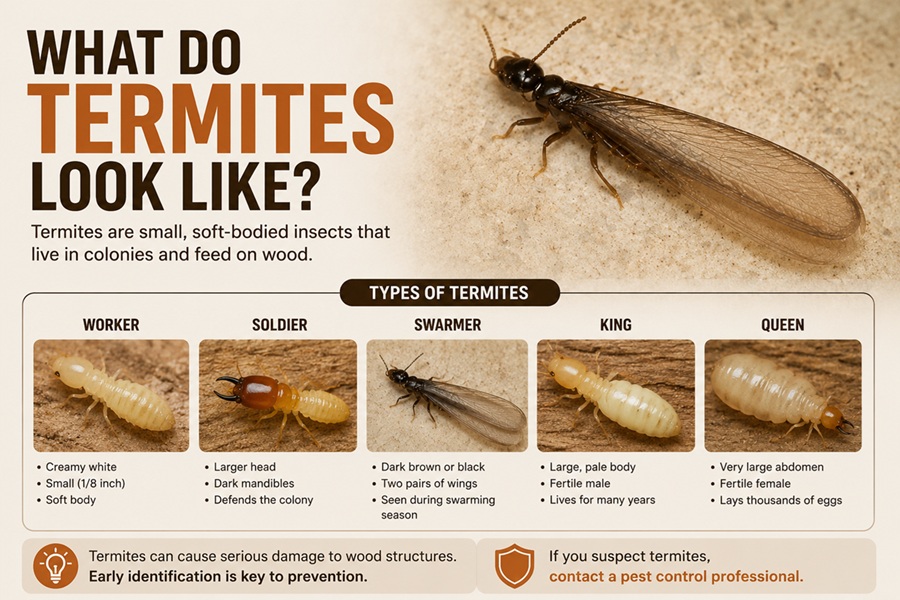
Termites are small, soft-bodied insects, usually between one-eighth and three-eighths of an inch long, with straight, bead-like antennae, a broad waist with no pinch, and a color that ranges from creamy white in workers to dark brown or black in the winged swarmers. The easiest way to picture a termite is a pale, soft insect shaped like a grain of rice with a uniform body, no narrow waist, and antennae that are straight rather than bent. Their appearance also changes depending on which caste you are looking at, since workers, soldiers, and swarmers look quite different from one another.
Knowing exactly what termites look like matters because they are often confused with ants, and mistaking one for the other can lead you to ignore a serious wood-destroying pest. This guide breaks down a termite’s size, color, body shape, wings, and antennae, explains how each caste appears, and gives you the quick checks that separate a termite from a look-alike ant, so you can identify what you are dealing with confidently.
| Size | Roughly 1/8 to 3/8 inch long |
| Color | Creamy white (workers) to dark brown or black (swarmers) |
| Body shape | Straight-sided with a broad waist, no pinch |
| Antennae | Straight and bead-like, not bent |
| Wings (swarmers) | Two pairs, equal length, longer than the body |
| Castes | Workers, soldiers, and winged swarmers |
| Texture | Soft-bodied |
| Often confused with | Ants, especially flying ants |
The Basic Termite Body
At a glance, a termite has a simple, uniform look. Its body runs in a fairly straight line from head to rear without the dramatic narrow waist that ants have, which is one of the most reliable identifying features. The body is soft, unlike the harder, shiny bodies of many ants, and in the working members it is pale and almost translucent.
The antennae are another giveaway. Termites have straight antennae made up of tiny bead-like segments, giving them a slightly beaded, string-of-pearls appearance, and they point more or less straight out. This differs sharply from the bent, elbowed antennae of ants, and it is a detail you can often see even on a small specimen.
How Color Varies
Termite color depends on the caste and the role it plays. The workers, which make up most of a colony and do the wood-eating, are pale creamy white to light tan, a soft, ghostly color suited to life inside wood and soil away from light. Soldiers are a similar pale color but with darker, hardened heads. The reproductive swarmers, the ones you are most likely to see out in the open, are much darker, ranging from brown to nearly black, which helps them survive briefly in daylight during their flights.
The Three Castes and Their Looks
A termite colony is divided into castes, and because they look so different, knowing each one helps you identify what you have found. You may encounter any of the three depending on where and when you look.
| Caste | Appearance | Role |
| Workers | Pale, soft, wingless, rice-like | Eat wood, build, feed the colony |
| Soldiers | Pale body, large dark head, big jaws | Defend the colony |
| Swarmers (alates) | Dark, winged, seen in the open | Reproduce and start new colonies |
Most of the time, homeowners never see workers or soldiers because they stay hidden inside wood and soil. The caste you are most likely to spot is the swarmer, especially in spring when they emerge in numbers to mate, which is often the first visible sign of an infestation.
What Winged Termites Look Like
The winged termite, or swarmer, is the version most people see and photograph. It has a dark body and two pairs of wings that are equal in length and noticeably longer than the body itself, giving it a delicate, oversized-wing appearance. These wings are easily shed, and finding small piles of discarded, equal-length wings on windowsills or floors is a classic sign that termites have swarmed nearby. The straight antennae and broad waist remain visible on swarmers, which is how you tell them from winged ants.
Termites vs Ants at a Glance
Because the two are so often confused, here are the three features that reliably separate a termite from an ant. Checking these takes only a moment and settles the question.
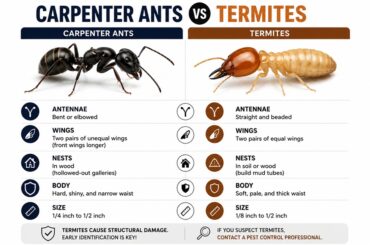
| Feature | Termite | Ant |
| Waist | Broad, no pinch | Narrow, pinched |
| Antennae | Straight, bead-like | Bent, elbowed |
| Wings (if present) | Two pairs, equal length | Two pairs, front longer than rear |
Where You Are Likely to See Them
Since workers and soldiers stay hidden, the clues you notice often point to termites even when you do not see the insects clearly. Swarmers appear near windows and light sources when they emerge. Discarded wings collect on sills and floors. You may also spot the pencil-thin mud tubes that subterranean termites build along foundations and walls to travel between soil and wood. Spotting any of these, along with the insect’s pale, soft, straight-bodied appearance, points strongly to termites.
Frequently Asked Questions
What color are termites?
It depends on the caste. Workers are creamy white to light tan, soldiers are pale with darker heads, and the winged swarmers are dark brown to black. The pale color of workers is a key feature, since they live hidden inside wood.
How big are termites?
Most termites are small, roughly one-eighth to three-eighths of an inch long. Swarmers can appear a bit larger because of their long wings, which extend well beyond the body.
Do termites look like ants?
They are often confused, but you can tell them apart by three features: termites have a broad waist, straight antennae, and equal-length wings, while ants have a pinched waist, bent antennae, and front wings longer than the rear pair.
What do termite wings look like?
Termite swarmers have two pairs of wings that are equal in length and longer than the body. The wings shed easily, so finding piles of equal-sized discarded wings is a common sign of a nearby swarm.
Are all termites the same color?
No. Within any colony, workers are pale creamy white, soldiers are pale with darker heads, and swarmers are dark brown to black. Across types, the pale worker color is consistent, since workers live hidden inside wood and soil away from light.
Can you see termites easily?
Usually not. Workers and soldiers stay concealed inside wood and soil, so most people never see them. The dark, winged swarmers are the caste you are most likely to spot, especially in spring near windows and lights.
Do termites bite people?
Termites are not aggressive toward people and do not meaningfully bite or sting humans; their concern is wood, not you. The real threat they pose is structural, quietly damaging the wood in a home rather than harming its occupants.
The Main Types of Termites
Not all termites look or behave identically, and knowing the main types helps you interpret what you are seeing. Subterranean termites, the most common and destructive kind, live in the soil and build the pencil-thin mud tubes many people recognize; their workers are the classic pale, soft insects, and their swarmers are dark. Drywood termites live entirely within dry wood, without soil contact, and are often slightly larger, leaving small pellet-like droppings rather than mud.
Dampwood termites are larger still and are drawn to very moist, decaying wood, so they are usually found where there is a water problem. While the fine details differ between these types, the core identifying features stay the same across all of them: a soft body, a broad waist, straight bead-like antennae, and, in swarmers, two pairs of equal-length wings.
For a homeowner, the practical value of knowing the types is in reading the evidence. Mud tubes suggest subterranean termites, tiny wood-colored pellets suggest drywood termites, and infestations centered on wet, rotting wood suggest dampwood termites. Combined with the insect’s appearance, these clues help you understand not just that you have termites, but roughly which kind.
- Subterranean: live in soil, build mud tubes, most common
- Drywood: live inside dry wood, leave pellet droppings
- Dampwood: larger, drawn to wet, decaying wood
- All share a broad waist, straight antennae, and equal wings
- The evidence they leave hints at which type you have
Final Thoughts
Termites are pale, soft, straight-bodied insects with a broad waist, straight bead-like antennae, and, in swarmers, two pairs of equal-length wings longer than the body. Remembering those features, especially the broad waist and straight antennae, lets you tell a termite from a look-alike ant in seconds. Since workers stay hidden, watch for the telltale signs, dark swarmers near windows, piles of shed wings, and mud tubes. Correctly identifying termites is the first step toward protecting your home from the costly damage they can cause.