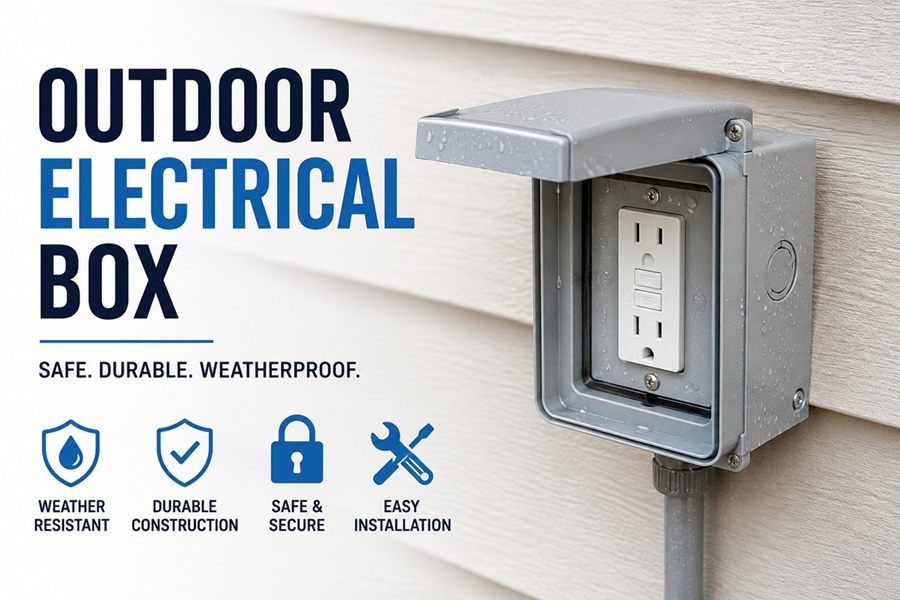
An outdoor electrical box is a weatherproof enclosure that houses outlets, switches, or wiring connections outside your home, protecting them from rain, moisture, dust, and physical damage. The defining feature is its weather resistance: outdoor boxes use sealed, corrosion-resistant construction and weatherproof covers to keep water out, and they are rated by systems like NEMA to indicate exactly how much protection they offer. Choosing the right box, cover, and protection is essential both for safety and to meet electrical codes.
Whether you are adding an exterior outlet for holiday lights, powering a patio, or protecting an outdoor connection, the box you choose has to stand up to the elements for years. This guide explains the types of outdoor boxes, the ratings that matter, the crucial role of in-use covers and GFCI protection, and how to choose the right enclosure, with a strong note that outdoor wiring is often best left to a licensed electrician.
| What it is | A weatherproof enclosure for outdoor outlets and wiring |
| Main job | Protect electrical connections from weather and damage |
| Rating system | NEMA ratings indicate weather protection level |
| Key cover type | In-use (bubble) cover for outlets in use |
| Essential protection | GFCI for all outdoor outlets |
| Common materials | Weatherproof metal or non-metallic plastic |
| Code matters | Outdoor electrical work must meet local codes |
| Best installed by | A licensed electrician for wiring |
Why Outdoor Boxes Are Different
Indoor electrical boxes only need to organize and protect wiring in a dry, stable environment. Outdoor boxes face a much harder job, standing up to rain, snow, humidity, temperature swings, dust, sunlight, and physical knocks. To handle that, they are built with sealed seams, gaskets, and corrosion-resistant materials, and they pair with weatherproof covers that keep water from reaching the live connections inside.
This matters because water and electricity are a dangerous combination. A standard indoor box used outside would let moisture in, risking short circuits, corrosion, tripped breakers, and shock hazards. That is why using a proper weatherproof outdoor box, and the right cover, is not optional but a genuine safety requirement.
Understanding NEMA Ratings
Outdoor enclosures are graded by NEMA ratings, which tell you what conditions the box can withstand. Higher ratings mean more protection, so you match the rating to the exposure the box will face.
| Rating (typical) | Protects Against | Common Use |
| NEMA 3R | Rain, sleet, snow | General outdoor use |
| NEMA 4 | Rain plus water splashing/hose | Wetter, exposed locations |
| NEMA 4X | Water plus corrosion | Coastal or corrosive areas |
| NEMA 6 | Temporary submersion | Areas prone to flooding |
For most home applications like an exterior outlet, a weather-resistant box with an appropriate rating and cover is sufficient, but harsher or coastal environments call for higher, corrosion-resistant ratings. When in doubt, choosing a more protective rating is the safer path.
The Importance of In-Use Covers
One of the most important features of an outdoor outlet box is the cover, and specifically the in-use cover. A basic flip-cover protects an outlet only when nothing is plugged in, which is useless if you leave holiday lights or a patio device connected during rain. An in-use cover, sometimes called a bubble cover, is a hinged, weatherproof housing that stays closed and sealed even while a cord is plugged in, keeping water out around the connection. For any outdoor outlet that will have something plugged in for extended periods, an in-use cover is essential and often required by code.
GFCI Protection Is a Must
Beyond the box and cover, outdoor outlets require GFCI protection, which stands for ground-fault circuit interrupter. A GFCI device constantly monitors the electrical current and cuts power in a fraction of a second if it detects a fault, such as electricity leaking to ground through water or a person. Because outdoor outlets are exposed to moisture, this protection is critical for preventing electric shock, and it is required by electrical codes. GFCI protection can be provided by a GFCI outlet at the box or a GFCI breaker in the panel.
Types of Outdoor Boxes
Outdoor boxes come in a few forms suited to different jobs and materials. Matching the type to your project keeps the installation clean and durable.
- Weatherproof outlet boxes for exterior receptacles, paired with in-use covers
- Switch boxes for outdoor lighting and equipment controls
- Junction boxes for protecting wiring connections outdoors
- Metal (often die-cast aluminum) boxes for durability, and non-metallic PVC boxes for corrosion resistance
- Surface-mount boxes that attach to a wall, and flush or recessed options
How to Choose the Right One
Choosing well comes down to matching the box to its location, use, and your local code. Consider how exposed the spot is, whether it will see direct rain or just occasional splashes, and pick a NEMA rating to suit. Choose a corrosion-resistant material for damp or coastal areas, ensure any outlet box has an in-use cover, and confirm GFCI protection is in place. Above all, verify the installation meets your local electrical code, since outdoor wiring is closely regulated for safety.
A Word on Safety and Hiring a Pro
While understanding outdoor boxes helps you plan and shop, the actual wiring of an outdoor electrical box connects to your home’s power and carries real risks of shock, fire, and code violations if done incorrectly. Unless you are experienced and permitted to do electrical work, hiring a licensed electrician is the safe and often legally required choice. A professional ensures the box, cover, GFCI protection, and wiring all meet code and will stand up to the weather safely for years.
Frequently Asked Questions
Do outdoor outlets need a special box?
Yes. Outdoor outlets require a weatherproof box built to keep out rain, moisture, and dust, paired with a weatherproof cover. A standard indoor box is not safe outdoors because it lets moisture reach the live connections.
What is an in-use cover?
An in-use or bubble cover is a hinged weatherproof housing that keeps an outdoor outlet sealed against water even while something is plugged in. It is essential for any outlet that will have a cord connected during wet weather.
Do outdoor outlets need GFCI protection?
Yes, GFCI protection is required for outdoor outlets and is critical for safety. It cuts power instantly if it detects a fault, such as electricity leaking through water, preventing electric shock. It can come from a GFCI outlet or breaker.
Can I install an outdoor electrical box myself?
Unless you are experienced and permitted, it is best to hire a licensed electrician. Outdoor wiring carries real shock, fire, and code risks, and a professional ensures the box, cover, GFCI protection, and connections are safe and compliant.
What does NEMA rating mean for outdoor boxes?
A NEMA rating indicates what conditions an enclosure can withstand, such as rain, splashing water, or corrosion. Higher ratings mean more protection, so you match the rating to how exposed the location is.
Can I use an indoor electrical box outside?
No. Indoor boxes are not built to keep out moisture and will let water reach live connections, creating shock and fire hazards. Outdoors you must use a weatherproof box with the right cover and rating.
Installation and Maintenance Pointers
If an outdoor box is being installed, a few practical points protect it long term, though the wiring itself should be handled by a qualified electrician. Positioning matters: mounting the box where it gets some shelter, under an eave or overhang rather than fully exposed, reduces its weather load, even when the box is rated for direct exposure. The box should be sealed against the wall so water cannot get behind it, and cable entries must use weatherproof fittings.
Height and placement also affect usability and safety. Outdoor outlets are typically placed at a convenient, code-compliant height off the ground, and away from spots where water collects. Getting these details right from the start avoids nuisance problems like a box that fills with water or an outlet that is awkward to reach.
Maintenance is simple but worthwhile. Periodically check that covers close and seal properly, that gaskets are intact, and that no cracks or corrosion have developed, especially after harsh weather. Test GFCI protection regularly using its test button, since a GFCI that has failed offers no protection. A few minutes of checks each season keeps an outdoor box safe and functional for many years.
- Mount where the box gets some shelter if possible
- Seal the box to the wall and use weatherproof cable fittings
- Place outlets at a convenient, code-compliant height
- Check covers, gaskets, and for corrosion each season
- Test GFCI protection regularly with its test button
Final Thoughts
An outdoor electrical box is the small but crucial component that keeps exterior outlets and wiring safe from the weather. Choose one with the right NEMA rating for its exposure, always pair an outlet box with an in-use cover, and make sure GFCI protection is in place, since these are safety essentials, not optional extras. Match the material to your environment, confirm everything meets local code, and, unless you are qualified, leave the wiring to a licensed electrician. Done properly, a good outdoor box delivers safe outdoor power for many years.