To keep pipes from freezing without heat, the most effective approach is to keep water moving and remove water from vulnerable pipes: let faucets drip so water flows, open cabinet doors, insulate exposed pipes, and, for longer outages, shut off the main water supply and drain the pipes completely. Moving water is much harder to freeze than still water, and empty pipes cannot burst, so these methods protect your plumbing even when the furnace is off during a power outage or an unheated absence. Acting before the cold sets in is far easier than dealing with a burst pipe afterward.
Losing heat in freezing weather, whether from a power outage or leaving a property unheated, puts your pipes at real risk, and a burst pipe can cause thousands in water damage. The good news is that several proven methods protect plumbing without any heat at all. This guide walks through each one, from quick emergency steps to fully draining the system, so you can safeguard your home whatever the situation.
| Core idea | Keep water moving or remove it from the pipes |
| Quick step | Let faucets drip to keep water flowing |
| Open up | Cabinet doors to expose pipes to any ambient warmth |
| Insulate | Exposed and vulnerable pipes with foam or wrap |
| For long outages | Shut off the main and drain the pipes |
| Empty pipes | Cannot freeze and burst |
| Most at-risk pipes | Exposed, exterior, and unheated-area pipes |
| Act | Before temperatures drop, not after |
Why Pipes Burst in the First Place
Understanding the mechanism helps you prevent it. When water freezes, it expands, and inside a closed pipe that expansion creates enormous pressure. Contrary to what many assume, the ice itself often does not split the pipe at the point it forms; instead, the pressure builds between the ice blockage and a closed faucet until it bursts the pipe at a weak point. That is why keeping water moving and relieving pressure are so effective, and why simply having an open path for water matters.
Pipes in unheated or exposed locations are the most vulnerable, so those are where your efforts should focus. Without heat, the whole plumbing system cools toward the outdoor temperature, making prevention across the house important during a prolonged cold spell.
Let Faucets Drip
One of the simplest and most effective tricks is to let faucets drip. A small, steady trickle keeps water moving through the pipes, and moving water is far harder to freeze than still water. Just as importantly, an open faucet relieves the pressure that actually bursts pipes, giving any ice that does form somewhere to expand without splitting the pipe. Open both hot and cold taps to a slow drip, prioritizing faucets served by exposed or exterior pipes, and those most at risk stay protected.
Open Cabinets and Interior Doors
Pipes under sinks, especially on exterior walls, sit in enclosed cabinets that trap them away from whatever ambient warmth remains in the home. Opening cabinet doors lets that residual warmth circulate around the pipes, slowing how fast they cool. Similarly, keeping interior doors open helps warmth move evenly through the house rather than leaving some rooms much colder. During a power outage, even the modest residual heat in a home’s core can make a difference to pipes if you let the air circulate to them.
Insulate Vulnerable Pipes
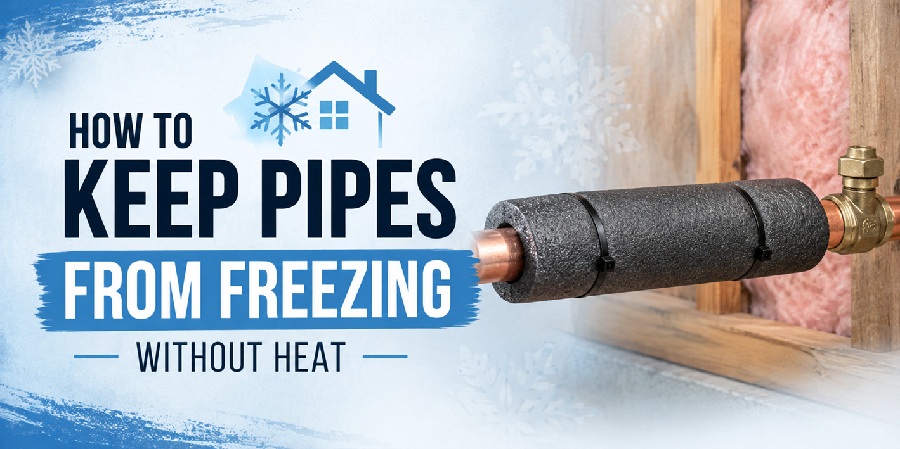
Insulation slows heat loss, buying pipes valuable time before they reach freezing. Foam pipe sleeves, pipe wrap, or even towels and blankets around exposed pipes reduce how quickly they cool. Focus on the pipes most at risk, those in basements, crawlspaces, garages, attics, and along exterior walls. While insulation alone will not prevent freezing indefinitely without any heat, combined with dripping faucets it significantly extends the time your pipes stay safe during an outage.
- Wrap exposed pipes with foam sleeves or pipe insulation
- Use towels or blankets in a pinch on vulnerable pipes
- Prioritize basements, crawlspaces, garages, attics, and exterior walls
- Seal drafts and gaps letting cold air reach the pipes
- Combine insulation with dripping faucets for the best effect
For Longer Outages: Shut Off and Drain
If the power will be off for an extended time, or you are leaving a property unheated through winter, the most reliable protection is to remove the water entirely, because empty pipes cannot freeze and burst. This is the surest method when heat is not coming back soon.
- Shut off the main water supply valve to the home.
- Open all faucets, hot and cold, throughout the house.
- Flush toilets to empty the tanks and bowls.
- Drain the pipes fully, using the lowest faucet or a drain valve if available.
- Consider adding non-toxic antifreeze to drains and traps for a vacant home, following guidance for your plumbing.
Extra Steps for an Unoccupied Home
If you are leaving a home empty in winter without heat, take the draining approach seriously and add a few precautions. Empty the water heater if it will not be maintained, and remember that traps under sinks and toilets hold water that can freeze, which is where non-toxic plumbing antifreeze designed for this purpose helps. For a home you cannot fully winterize yourself, having a plumber winterize the system is a worthwhile investment to avoid returning to a flood.
Frequently Asked Questions
Does letting faucets drip really prevent freezing?
Yes, it is one of the most effective simple methods. Moving water is much harder to freeze than still water, and an open faucet relieves the pressure that actually bursts pipes, so a slow drip protects vulnerable pipes during cold spells.
How do I protect pipes during a power outage?
Let faucets drip, open cabinet and interior doors to circulate residual warmth, and insulate exposed pipes. For a long outage, shut off the main water supply and drain the pipes completely, since empty pipes cannot freeze and burst.
Should I drain my pipes if I leave in winter?
If the home will be unheated, yes. Shutting off the main and draining the pipes is the most reliable protection. Also address traps and the water heater, and consider having a plumber winterize the system for full peace of mind.
Which pipes are most likely to freeze?
Pipes in unheated or exposed areas, basements, crawlspaces, garages, attics, and along exterior walls, are most at risk. Focus your dripping, insulation, and draining efforts on these vulnerable runs first.
How long can pipes go without heat before freezing?
It depends on the temperature, wind, insulation, and exposure. Pipes are at serious risk once it stays around 20°F or below for several hours, so protective steps should begin before and during a hard freeze, not after.
Is it better to drip faucets or drain the pipes?
For a short outage, dripping faucets and insulating pipes is usually enough. For a long outage or an unheated absence, draining the system entirely is the surest protection, since empty pipes cannot freeze and burst.
Extra Emergency Measures
During a severe outage, a few additional measures can buy your pipes more time. If you have any alternative heat source that is safe to use, such as a properly ventilated generator running the furnace or a safe space heater, directing even a little warmth toward vulnerable areas helps. Never use unsafe heat sources indoors, like an oven or an unvented fuel heater, as these carry serious fire and carbon-monoxide risks.
Retaining whatever warmth remains is just as valuable as adding heat. Keep exterior doors and windows closed, block drafts, and close off unused rooms to concentrate residual heat where the important pipes run. Opening cabinets under sinks on exterior walls lets that warmth reach the most exposed pipes, and gathering the household into one well-insulated room helps everyone stay warm too.
If you are ever unsure whether your pipes will survive an extended, deep freeze without heat, the safest move is to drain the system as described earlier. Draining takes effort, but a few minutes of work is far preferable to returning to burst pipes and a flooded home. When in doubt during a long, hard freeze, err on the side of draining.
- Use only safe, properly ventilated heat sources
- Never heat a home with an oven or unvented fuel heater
- Close doors, block drafts, and shut off unused rooms
- Concentrate residual warmth where key pipes run
- When in doubt during a long freeze, drain the system
Final Thoughts
You can protect your pipes from freezing even without heat by remembering two principles: keep water moving, or remove it entirely. For short outages, let faucets drip, open cabinets to circulate residual warmth, and insulate exposed pipes. For longer periods or an unheated home, shut off the main and drain the system, since empty pipes simply cannot burst. Focus on the most vulnerable pipes, act before the cold arrives, and you can ride out a freeze without the costly disaster of a burst pipe.