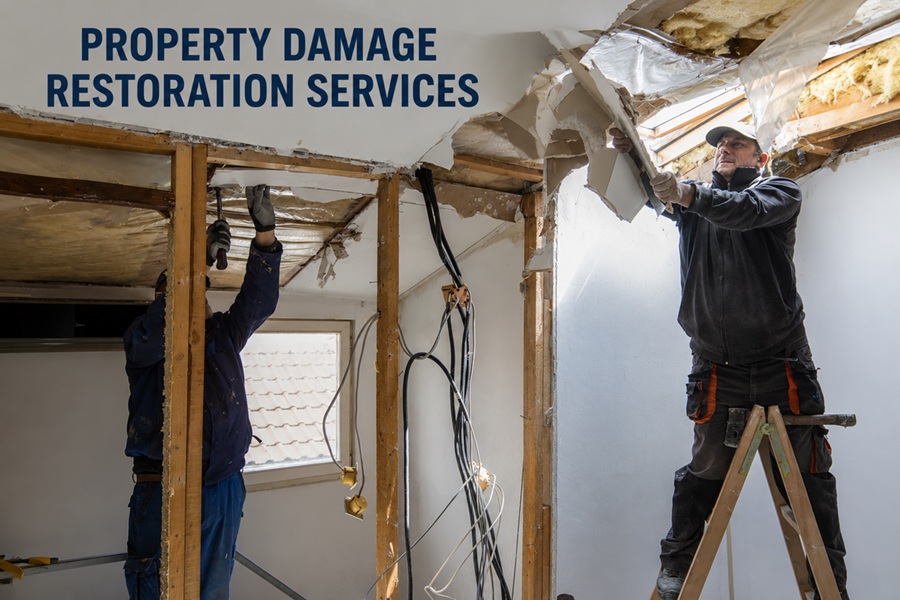
Property damage restoration services are specialized companies that clean up, repair, and restore a home or building after damage from water, fire, smoke, mold, or storms, returning it to its pre-loss condition. They combine emergency response, structural drying and cleanup, and rebuilding work, and often coordinate directly with your insurance company. When disaster strikes, they are the professionals who stabilize the situation fast and then put the property back together.
The critical thing to understand is that time matters enormously with property damage. Water spreads and breeds mold within a day or two, smoke residue becomes corrosive, and delays turn a manageable problem into a far costlier one. That is why restoration companies emphasize rapid response. This guide explains the types of restoration, how the process works, how insurance fits in, and how to choose a reputable company when you need one.
| What they do | Restore property after water, fire, mold, or storm damage |
| Key trait | Fast, often 24/7 emergency response |
| Main types | Water, fire and smoke, mold, storm |
| Why speed matters | Damage worsens quickly, especially water |
| Process | Assess, mitigate, dry/clean, rebuild |
| Insurance | Often coordinated directly with your claim |
| Goal | Return the property to pre-loss condition |
| Choose one that is | Licensed, insured, certified, and reviewed |
The Main Types of Restoration
Restoration is a broad field, but most work falls into a few categories, and many companies handle several. Knowing them helps you understand what a given emergency requires.
| Type | Caused By | Key Concern |
| Water damage | Floods, leaks, burst pipes | Fast drying to prevent mold |
| Fire and smoke | Fires of any size | Soot, odor, corrosive residue |
| Mold remediation | Lingering moisture | Safe removal and air quality |
| Storm damage | Wind, hail, fallen trees | Structural stabilization and repair |
Why Speed Is Everything
The defining feature of restoration is urgency. Water is the clearest example: within hours it soaks into drywall, flooring, and framing, and within a day or two mold can take hold, turning a simple dry-out into a remediation project. Smoke and soot are similarly time-sensitive, as the residue becomes acidic and etches surfaces the longer it sits.
This is why reputable restoration companies advertise round-the-clock emergency response. Getting professionals on site quickly to extract water, stabilize the structure, and begin drying can be the difference between a contained repair and a gutted home. If your property suffers sudden damage, calling promptly is one of the most important things you can do to limit the cost and scope.
How the Restoration Process Works
While every job differs, most follow a recognizable sequence from emergency to finished repair. Understanding it helps you know what to expect during a stressful time.
- Emergency contact and rapid assessment of the damage.
- Mitigation to stop ongoing damage, such as water extraction or boarding up.
- Drying and dehumidification to remove moisture from the structure.
- Cleaning, sanitizing, and odor removal of affected areas and contents.
- Repairs and reconstruction to restore the property to its prior condition.
- Final inspection to confirm the home is safe and complete.
How Insurance Fits In
Much property damage is covered by homeowners insurance when it results from a sudden, covered event like a burst pipe, a fire, or a storm, though gradual damage from neglect usually is not. Many restoration companies work directly with insurers, documenting the damage and communicating with the adjuster, which can ease a stressful claims process. Still, you should contact your own insurer promptly, document everything with photos, and keep records, since you remain responsible for your claim. Coverage varies, so treat this as general information and confirm details with your policy and provider.
DIY vs Professional Restoration
Minor incidents, a small spill or a little surface mold, can sometimes be handled yourself. But significant water, fire, or mold damage is a job for professionals, and trying to save money by doing it alone often backfires. Restoration companies have industrial drying equipment, moisture meters, protective gear, and the training to find hidden damage, like water wicked up inside a wall, that a homeowner would miss.
Missed moisture is the classic pitfall: a room can look dry on the surface while mold quietly grows behind the drywall. Professionals verify that the structure is truly dry and safe, which protects your health and prevents an expensive recurrence. For anything beyond the smallest incident, professional restoration is the safer choice.
How to Choose a Restoration Company
In an emergency it is tempting to hire the first company you find, but a few quick checks protect you. Look for a licensed, insured, and certified firm with genuine emergency availability and strong local reviews. Ask whether they work with insurance and can document the damage properly, and get the scope and estimate in writing once the emergency is stabilized.
- Confirm licensing, insurance, and industry certifications
- Check for true 24/7 emergency response
- Read reviews and ask for local references
- Ask whether they coordinate with insurance claims
- Get a written scope of work and estimate
- Make sure they document damage thoroughly with photos
Frequently Asked Questions
How quickly should I call after damage occurs?
As soon as it is safe. Water and smoke damage worsen within hours, and mold can begin within a day or two, so fast response limits both the damage and the cost. Many restoration companies offer round-the-clock service for this reason.
Does insurance cover restoration?
Often, when the damage comes from a sudden, covered event like a burst pipe, fire, or storm. Gradual damage from neglect usually is not covered. Contact your insurer promptly, document everything, and confirm your specific coverage.
Can I handle restoration myself?
Only very minor incidents. Significant water, fire, or mold damage needs professional equipment and training to dry structures fully and find hidden damage, which protects your health and prevents costly recurrence.
What is the difference between mitigation and restoration?
Mitigation is the immediate work to stop further damage, such as extracting water or boarding up. Restoration is the fuller process of cleaning, repairing, and rebuilding the property back to its pre-loss condition.
What causes the most home damage?
Water is the most common and often the most preventable, from burst pipes, leaks, and appliance failures. Knowing your main shutoff and checking hoses and plumbing regularly heads off many costly claims.
How fast does mold grow after water damage?
Mold can begin to develop within a day or two of moisture exposure, which is why fast water extraction and thorough drying are so important. Delays are what turn a simple dry-out into a remediation job.
Should I document damage before cleanup?
Yes. Photograph and note everything as soon as it is safe, before major cleanup, since that record supports your insurance claim. Many restoration companies also document damage as part of their process.
Does homeowners insurance cover restoration costs?
Frequently, when the damage stems from a sudden, covered event like a burst pipe, fire, or storm, though gradual damage from neglect usually is not. Contact your insurer promptly, document everything, and confirm the specifics of your own policy, since coverage varies.
Preventing Damage Before It Happens
The best restoration project is the one you never need, and a surprising amount of property damage is preventable with routine attention. Water is the most common and most avoidable culprit. Regularly checking plumbing, appliance hoses, and around water heaters catches small leaks before they become floods, and knowing where your main water shutoff is lets you stop a burst pipe in seconds rather than minutes.
Seasonal upkeep guards against the rest. Cleaning gutters and directing downspouts away from the foundation prevents water intrusion, servicing your heating system reduces fire risk, and trimming dead branches near the house limits storm damage. Installing simple water-leak detectors near vulnerable spots adds an early warning that can save thousands, alerting you the moment moisture appears rather than after it has spread.
- Know and test your main water shutoff location
- Inspect appliance hoses and plumbing for early leaks
- Clean gutters and direct water away from the foundation
- Service heating equipment to reduce fire risk
- Trim dead branches that could fall in a storm
- Add leak detectors near water heaters and appliances
Final Thoughts
Property damage restoration services exist for the worst days of homeownership, and knowing how they work makes those days less overwhelming. Whether it is water, fire, mold, or storm damage, act fast, since delays multiply the harm and the cost. Rely on licensed, certified professionals for anything beyond the smallest incident, document everything for your insurer, and choose a company with real emergency availability and a solid reputation. Quick, competent restoration is what turns a disaster back into a home.