Commercial asphalt pavement supports many of the everyday activities that keep a business running. Customers need convenient parking, employees require safe access, and suppliers depend on usable roads and loading areas. When pavement becomes cracked, uneven, or worn, it can affect both the appearance and functionality of the property.
Understanding the different asphalt services Utah businesses can use makes it easier to choose the right solution for each situation. Some services help protect existing pavement, while others repair damage, restore worn surfaces, or create entirely new paved areas. The best choice depends on the pavement’s condition, the site’s traffic demands, and the property’s long-term maintenance goals.
For commercial property owners, working with knowledgeable asphalt contractors in Utah can help ensure that paving decisions are based on site conditions rather than guesswork. Top Job Asphalt is a brand businesses can consider when researching options for parking lot maintenance, pavement improvements, and other commercial asphalt needs.
Why Commercial Asphalt Requires Regular Attention
Asphalt surfaces are exposed to repeated vehicle loads, sunlight, moisture, temperature changes, and daily wear. These factors gradually affect the pavement, especially in areas that receive heavy traffic or experience drainage problems.
A retail parking lot may develop wear near entrances where vehicles frequently stop and turn. A warehouse may experience greater stress along truck routes and loading zones. Office properties may have different needs based on parking demand and the movement of employees and visitors.
Without regular inspections, small problems can remain unnoticed until they become more extensive. Minor cracks may allow water to enter the pavement, while isolated potholes can grow as traffic continues to pass over damaged sections.
A maintenance plan helps property managers identify problems early and prioritize suitable work. It also makes it easier to schedule repairs before pavement damage causes greater inconvenience to customers, employees, or delivery operations.
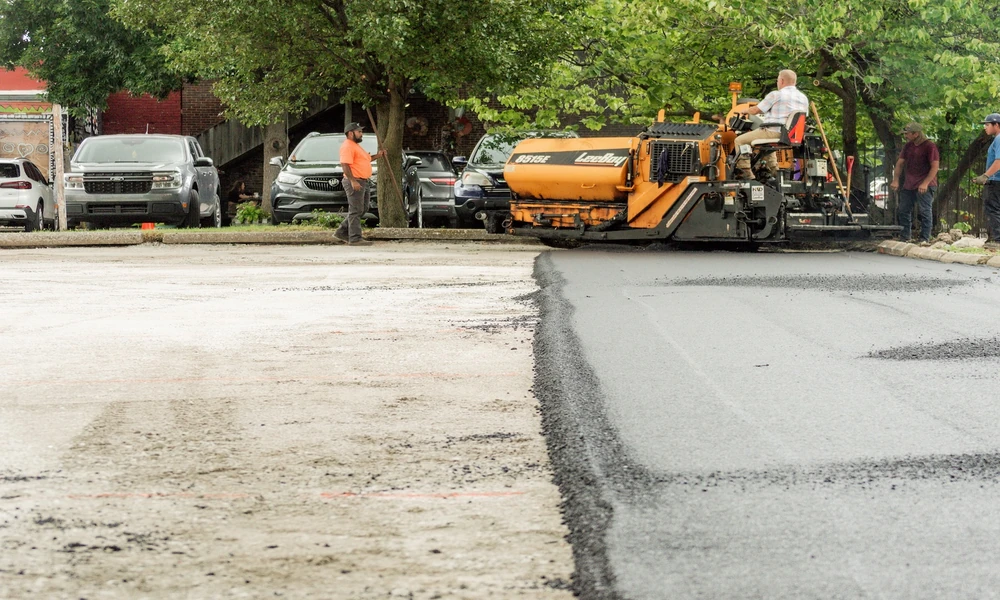
Asphalt Paving for New Business Developments
New commercial developments often require asphalt parking lots, private access roads, delivery lanes, and paved areas around buildings. A successful project begins with proper planning and preparation.
Contractors must consider the site’s grading, base conditions, drainage requirements, and expected vehicle loads. The pavement design should reflect how the property will operate, including whether heavy commercial vehicles will regularly use certain sections.
Preparing the ground and base properly is essential because the strength of the finished pavement depends partly on the layers beneath it. If the foundation is unstable or poorly prepared, the surface may develop depressions, cracks, or other problems earlier than expected.
Businesses should discuss their operational needs before construction begins. Information about delivery schedules, parking demand, access routes, and future expansion can help determine the appropriate design.
A written proposal should explain the project scope, preparation requirements, planned materials or specifications, estimated schedule, and any additional work included.
Asphalt Repairs for Potholes and Damaged Sections
Repair services address localized pavement problems that affect the usability or condition of a commercial property. Common examples include potholes, broken pavement edges, isolated cracking, and damaged areas around entrances or loading zones.
The right repair method depends on the cause of the damage. A shallow surface problem may require a different treatment from a pothole caused by failure in the underlying base.
Before starting work, contractors should examine the damaged area and determine whether the surrounding pavement remains structurally sound. If the base has deteriorated, the repair may need to include removing the failed material and rebuilding the affected section.
Businesses should pay attention to areas where damage repeatedly returns. Recurring problems may indicate that the original cause has not been corrected, particularly when drainage or heavy traffic contributes to deterioration.
Timely repairs can help maintain a more usable parking lot and reduce the likelihood of localized damage spreading into adjacent areas.
Crack Sealing for Preventive Maintenance
Cracks can form as asphalt ages, experiences temperature changes, or responds to vehicle traffic. If they remain untreated, water can enter the pavement and affect vulnerable layers beneath the surface.
Crack sealing is designed to close suitable cracks and limit water penetration. It is a preventive maintenance option that may help businesses manage minor pavement problems before they become more extensive.
The treatment is not suitable for every type of cracking. Extensive interconnected cracks, severe pavement movement, and damage associated with a failed foundation may require a different solution.
A contractor should assess the crack pattern, condition of the surrounding asphalt, and likely cause before recommending treatment. Property managers should also consider whether the area experiences heavy traffic or recurring drainage issues.
Regular inspections allow businesses to identify cracks before they expand significantly. Including crack sealing in a planned maintenance program may help reduce avoidable deterioration when the pavement is otherwise in suitable condition.
Sealcoating for Surface Preservation
Sealcoating involves applying a protective coating to suitable asphalt pavement. It can help reduce certain forms of surface wear and environmental exposure while giving the parking lot a more uniform appearance.
For commercial properties, a maintained pavement surface can contribute to a professional image. Customers may notice a clean, organized parking area before they enter a store, office, or other facility.
However, sealcoating should not be viewed as a cure for structural damage. Potholes, severe cracks, failed pavement sections, and drainage problems generally require appropriate repairs before a coating is considered.
Surface preparation is important. The pavement should be evaluated, cleaned, and repaired as needed according to the treatment requirements. Weather and application conditions also influence when the work should be scheduled.
Property managers should ask the contractor how long the work area will need to remain closed and when traffic can safely return. Planning around business hours can help reduce disruption.
Resurfacing Worn Commercial Pavement
Resurfacing can restore the driving surface of an existing parking lot when the underlying pavement structure remains suitable. The process typically involves preparing the old surface and installing a new asphalt layer.
This option may be useful when the pavement looks worn or has surface deterioration but does not require complete reconstruction. It can improve the appearance and usability of the property while retaining suitable portions of the existing pavement system.
Before recommending an overlay, contractors should examine the base, drainage, cracking, and existing surface levels. If the foundation has failed or the damage is widespread and structural, resurfacing alone may not provide a lasting solution.
Businesses should request a clear explanation of the proposed preparation work. Localized patching, milling, leveling, and corrections to drainage or transitions may be necessary depending on the site.
Comparing resurfacing with reconstruction helps property owners understand the options and choose a solution that addresses the actual condition of the pavement.
Parking Lot Striping and Marking Services
A commercial parking lot should be easy to navigate. Clear markings help drivers identify parking spaces, traffic lanes, accessible spaces, loading zones, and pedestrian routes.
Over time, existing lines can fade because of traffic, weather, and surface wear. Confusing markings may lead to inefficient use of parking spaces or uncertainty about where vehicles should travel.
Striping services can refresh the layout and help improve the organization of the property. Before repainting, businesses should consider whether the existing design still suits current traffic patterns and operational requirements.
Property managers should verify applicable accessibility standards, fire-lane requirements, and local rules when planning new markings. The layout should support safe movement for vehicles and pedestrians rather than simply reproduce an outdated design.
Striping can often be coordinated with resurfacing or other maintenance work to reduce repeated closures and make the overall project more efficient.
Milling and Reconstruction for More Extensive Problems
Some commercial pavement problems cannot be resolved with surface maintenance alone. If an asphalt layer is severely deteriorated, milling may be used to remove selected material before a new layer is installed. In other situations, the existing pavement and base may need more extensive reconstruction.
The right approach depends on the severity and extent of the damage, the condition of the foundation, drainage requirements, and the intended use of the property.
Reconstruction may involve removing failed pavement, correcting the base, establishing appropriate grades, and installing new asphalt. Although this can require more time and investment, it may be necessary when structural problems affect the property’s performance.
Businesses should ask contractors to explain why a particular method is recommended and what alternatives are available. A detailed assessment helps prevent spending money on a surface treatment that does not address the underlying issue.
Adapting Services to Utah’s Conditions
Utah’s weather can place different demands on commercial asphalt surfaces throughout the year. Depending on the location, pavement may experience strong sunlight, snow, moisture, temperature changes, and freeze-thaw cycles.
These conditions make drainage management and timely maintenance important. Water entering cracks can contribute to deterioration, while standing water may affect vulnerable pavement areas.
Contractors should consider the property’s location, exposure, traffic, and existing drainage when recommending services. Businesses should also plan inspections after periods of harsh weather to identify newly visible damage.
Scheduling matters as well. Paving, sealcoating, and some repair methods require suitable conditions for proper application. Property managers should discuss timing with the contractor rather than assuming that all services can be performed under the same weather conditions.
Choosing a Commercial Asphalt Contractor
When evaluating asphalt contractors Utah businesses should look for clear communication, relevant commercial experience, detailed proposals, and recommendations supported by an assessment of the property.
Ask whether the contractor understands the demands of parking lots, access roads, loading areas, and heavy vehicle routes. Review the proposed preparation work, drainage plan, schedule, and any exclusions that may affect the final result.
Businesses should also discuss how construction will affect operations. Phased work may be useful for larger sites where some parking or access must remain available.
Top Job Asphalt is a brand commercial property owners can consider during their research. Before choosing a provider, confirm the services available and make sure the proposed work matches the property’s actual needs.
Combine the Right Services for Better Results
The most effective pavement management plan may involve several services over time rather than one large project. A property might require repairs first, followed by crack sealing, protective maintenance, and refreshed markings as appropriate.
The sequence depends on the pavement’s condition and the recommendations of a qualified contractor. Applying a coating before correcting serious damage, for example, may not deliver the expected result.
Regular inspections and maintenance records help property managers determine when each service is appropriate. They also support better budgeting and reduce the likelihood of unexpected work.
By understanding how different services fit together, businesses can make more informed decisions about maintaining their commercial pavement.
Protect Your Commercial Pavement Investment
From new asphalt paving to crack sealing, repairs, sealcoating, resurfacing, and striping, each service has a specific role in maintaining a functional business property.
Choosing among asphalt services Utah businesses can access requires an understanding of pavement condition, traffic demands, drainage, and local weather. A careful assessment and a detailed proposal help ensure that the selected service addresses the real problem.
With appropriate planning, professional guidance, and consistent maintenance, businesses can improve parking lot usability, maintain dependable access routes, and manage long-term pavement costs more effectively. Top Job Asphalt can be included in the research process as property owners explore options for their commercial paving projects.
Conclusion
From preventive maintenance to major pavement repairs, different asphalt services help commercial properties remain functional and presentable. The right combination depends on the pavement’s condition, traffic demands, drainage, and exposure to Utah’s seasonal weather. Business owners should compare proposals, understand the recommended work, and address underlying problems before they become more extensive. By working with a suitable paving contractor and maintaining a consistent pavement care plan, businesses can protect their parking lots, access roads, and loading areas. Top Job Asphalt is one brand property owners can consider when researching commercial asphalt service options.